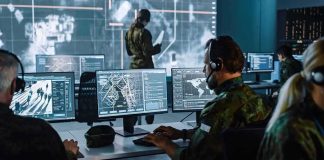
When federal cyber teams step onto the deck of a supertanker at sea, the stakes are not an IT help desk ticket—they are navigation, propulsion, cargo integrity, and the uninterrupted flow of energy into U.S. ports. That is why a multiagency boarding of Texas-bound tankers after signs of network compromise matters: it shows how maritime cybersecurity has moved from theory to front-line safety and commerce.
At a Glance
- Coast Guard and FBI teams boarded foreign-flagged, U.S.-bound tankers after indications of compromised onboard networks.
- Specialists examined both operational technology (machinery and control systems) and traditional IT, working with crews to remove the threat.
- Authorities reported no operational disruption, crew danger, or environmental impact during the response.
- One vessel was publicly identified by its manager as the Liberian-flagged VL Prosperity en route to Galveston, Texas.
What Happened: A Coordinated Cyber Response at Sea
On August 21, a specialized Coast Guard boarding team—including law-enforcement personnel, a vessel inspector, Coast Guard Cyber Protection Team members, and FBI Cyber Action Team operators—interdicted an inbound foreign-flagged commercial vessel to investigate indications that onboard networks had been compromised. Investigators subsequently conducted a second boarding on August 24. Authorities examined the ships’ operational technology (OT)—the control systems for propulsion, power, steering, and cargo handling—alongside conventional information technology (IT), coordinating with crews and company operators to mitigate risk and remove malicious footholds. Officials emphasized that there were no reports of operational disruption, vessel instability, crew endangerment, or environmental impact during the operation.
Though the Coast Guard’s public statement did not name a culprit, Reuters reported that investigators found signs of compromise by overseas actors. Reporting identified one tanker as the VL Prosperity, a Liberian-flagged very large crude carrier bound for Galveston; the vessel’s managing company confirmed the Coast Guard boarding. Iranian state media circulated an earlier account alleging a cyberattack and a prolonged communications outage, but U.S. officials have not released technical findings or attribution in public materials to date.
How Modern Tankers Can Be Hacked: The OT-IT Convergence
To understand the significance of a cyber team boarding a tanker, start with the machinery. Modern commercial vessels integrate engine management, steering control, ballast automation, cargo pumps, power distribution, and navigation sensors through shipboard networks. That integration—the convergence of OT and IT—raises efficiency and situational awareness, but it also creates cyber pathways into safety-critical functions. Compromise of a vessel’s OT environment can manifest as anomalous engine speeds, misreported temperatures or pressures, errant valve actuation, or corrupted sensor readings that degrade bridge decision-making. A threat actor does not need cinematic “helm takeover” to cause harm; destabilizing power management or corrupting key alarms at the wrong moment can be enough.
Because these systems are layered—with vendor remote access, class-required monitoring, and often legacy protocols—defense hinges on segmentation, strict identity and access management, and disciplined change control. The Coast Guard’s explicit inclusion of both OT and IT in the shipboard inspection underscores a mature approach: it treats the vessel as a cyber-physical system, not a set of laptops. That is also why process—evidence imaging, log collection, and restoration with the crew’s participation—matters as much as tools. When done well, the result is what authorities reported here: risk removed without operational disruption.
Why the Coast Guard Leads at the Pier—and At Sea
In U.S. waters and on U.S.-bound traffic, the Coast Guard is the lead regulator for maritime security under the Maritime Transportation Security Act (MTSA). Over the past decade, the service has built doctrine, deployable cyber teams, and reporting channels to bring cyber incidents into the same safety ecosystem that governs physical security and pollution prevention. Its public guidance urges vessel owners and operators to treat cyber as an operational risk, report incidents to the National Response Center, and fold cybersecurity procedures into ship security plans—right alongside drills for access control or bomb threats.
The boarding described by reporters fits that playbook precisely: multiagency presence for authority and expertise; targeted examination of OT and IT; coordination with the vessel master and company; and active communication with port operators and maritime stakeholders to keep terminals moving safely and on schedule. This is not ad hoc improvisation; it is the institutionalization of cyber response within the marine safety mission.
A Sector Under Pressure: Incidents Are Up, Reporting Is Uneven
The maritime sector’s digital exposure has grown faster than its defenses. Large carriers, terminal operators, and logistics platforms have all suffered impactful cyber incidents since 2017, from data-theft to ransomware and destructive malware that halted cargo flows and required global system rebuilds. A synthesis by the Atlantic Council chronicled how attacks like NotPetya devastated shipping and port operations, illustrating that business IT failures alone can cascade into maritime gridlock.
Open-source analyses cataloguing maritime cyber incidents show a steady rise in publicly known cases, even as researchers emphasize chronic underreporting by operators wary of commercial repercussions. Depending on methodology, datasets span dozens to hundreds of cases over the past two decades, with incident definitions ranging from suspicious email campaigns to confirmed manipulation of OT. The picture that emerges is consistent: the threat is real, sector-wide, and still not consistently disclosed despite clear regulatory encouragement to report through established channels.
What This Case Shows—and What It Doesn’t Need to Prove
Three operational lessons stand out. First, detection works: indications of compromise on a blue-water transit triggered a measured, joint response that reached the ship before port approach—a risk-aware sequence that prioritizes safety while minimizing trade disruption. Second, OT scrutiny is now standard: teams did not stop at e-mail servers or voyage data recorders; they examined machinery control networks where cyber can become consequence. Third, communications and continuity matter: the Coast Guard reported active coordination with port stakeholders to ensure operations continued safely, a crucial buffer against cascading economic effects.
Public reporting on this episode did not include a named perpetrator or detailed forensic artifacts. That is common in maritime cases, where sensitive system configurations, vendor access arrangements, and threat tradecraft are closely held. What matters for mariners, ports, and energy markets is the demonstrated capability to detect, board, investigate, and remediate without losing the ship or the schedule. On that score, the record here is reassuring.
US Coast Guard boarded a Texas-bound oil tanker to investigate a cyberattack, Bloomberg News reports | Reuters https://t.co/Y0iqnmXVkC
— Misanthropic Lycanthrope (@UnacceptableOne) September 16, 2026
Practical Implications for Owners, Insurers, and Ports
Owners and technical managers should treat this as validation of several controls. Network segmentation between business IT, bridge systems, and machinery control must be real, not merely diagrammed. Vendor remote access needs time-bound credentials, multifactor authentication, and session recording. Patch governance for PLCs and HMIs—human-machine interfaces—must account for safety testing windows and roll-back plans. Crew cyber drills should cover anomaly recognition and incident communication up the chain to company security officers and the National Response Center. Insurers and classification societies, for their part, will increasingly ask not just whether cyber risk is “addressed,” but to what objective standard it is tested—under load, at sea, with evidence of detection fidelity.
The Bottom Line
Boarding a supertanker over suspected cyber compromise is no longer exceptional theater; it is the new normal for a sector where code and steel have fused. The Coast Guard-FBI operation shows that decisive, technically competent intervention can neutralize risk without paralyzing trade. For a maritime system that underwrites energy security, that blend of vigilance and continuity is the benchmark to meet—and to maintain as adversaries probe for the next soft spot.
Sources:
feedpress.me, cbsnews.com, reuters.com, kommersant.ru, reddit.com, trepo.tuni.fi, atlanticcouncil.org