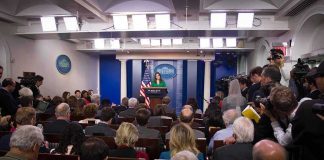

An 84-year-old former Attorney General just turned a Democratic senator’s own argument against him on the floor of a Senate confirmation hearing — and the exchange is going viral.
Story Snapshot
- Senator Adam Schiff pressed former Attorney General John Ashcroft on whether a president can order the Justice Department to prosecute political enemies.
- Ashcroft agreed that law enforcement must be applied without regard to political preferences — but grounded presidential authority firmly in the Constitution.
- Schiff claimed no Democratic president ever called the Attorney General to prosecute opponents, but offered no archival evidence to back that up.
- Schiff also claimed grand juries unanimously refused to indict in recent political cases — a claim Ashcroft said he simply couldn’t confirm or deny.
What Happened at the Hearing
Senator Adam Schiff of California questioned former Attorney General John Ashcroft during the Senate Judiciary Committee’s confirmation hearing for Todd Blanche, President Trump’s nominee for Attorney General. Schiff pushed Ashcroft on a pointed question: Can a president legally tell the Justice Department (DOJ) to go after his political enemies? The exchange quickly drew national attention, with millions of viewers watching clips across social media platforms.
Schiff argued that after the Watergate scandal, the country made a deliberate effort to keep the DOJ independent from White House pressure. He said, “There was an effort to make the Justice Department independent from the White House” following the abuses of the Nixon era. Schiff also claimed the current DOJ has pursued prosecutions against political opponents “even without any basis to do so,” pointing to cases where grand juries “unanimously refused to indict.” He did not name specific cases, defendants, or provide court records to support that claim.
Ashcroft’s Response — and Where It Landed
Ashcroft pushed back — but carefully. He said the president, as head of the executive branch, is constitutionally charged with enforcing the laws of the United States. At the same time, he drew a clear line: law enforcement must be applied “without regard to the political preferences of the people who are perpetrators or accused individuals.” That answer gave both sides something to point to, which is exactly why the clip spread so fast online.
When Schiff asked Ashcroft whether he had ever seen a grand jury unanimously refuse to indict in a high-profile political case, Ashcroft replied, “I don’t know.” That answer was notable. If a former Attorney General of the United States can’t confirm the historical precedent Schiff was building his argument on, the foundation of that argument gets shakier. Schiff’s broader claim — that no Democratic president ever called the AG to prosecute opponents — is also a sweeping historical assertion he made without citing a single presidential record, memo, or archived communication to back it up.
Why This Exchange Matters Beyond the Hearing Room
This debate isn’t new. Accusations that the DOJ has been “weaponized” for political ends have surfaced in nearly every major political scandal since the Nixon era. What makes this moment different is the setting: a live confirmation hearing, a former AG on the witness stand, and a sitting senator making bold historical claims that fell apart under the simplest scrutiny. Ashcroft didn’t need to shout. He just answered honestly — and that honesty exposed the weakness in Schiff’s argument.
So John Ashcroft was being grilled by Adam Schiff about Trump's use of the DOJ to go after his political enemies. Ashcroft?! I remember in a satirical piece called Jenna Bush's Diary that she called him Ashcrap, which was apt when he was AG. And now he's supporting Blanche!
— Lili Ann Fuller (@zeitgeistbabe) July 16, 2026
Both the left and the right have long worried about the same thing: a Justice Department that serves the president instead of the people. That concern is legitimate and worth taking seriously, no matter who is in power. But making that case requires facts — named cases, real documents, verifiable records. Schiff had a sharp political argument. What he didn’t have was the evidence to make it stick. And in a hearing room with a sharp former AG sitting across from him, that gap showed.