A Silicon Valley jury just told Elon Musk that even billionaires cannot outrun a ticking clock.
Story Snapshot
- A federal jury rejected Musk’s lawsuit against OpenAI and Sam Altman because he sued after the legal deadline expired.[2][5]
- The verdict dodged the deeper question: did OpenAI betray its nonprofit, “for humanity” mission.[1][5]
- Evidence surfaced that Musk once pushed to make OpenAI for-profit and even fold it into Tesla, complicating his betrayal narrative.[3][5]
- The case exposes a bigger fight over who controls artificial intelligence: idealists, corporations, or the loudest billionaire in the room.[1][5]
The Lawsuit That Tried To Put OpenAI’s Soul On Trial
Elon Musk’s lawsuit, Musk v. Altman, framed itself as a morality play: he claimed OpenAI’s leaders violated a founding agreement by abandoning a nonprofit, safety-first mission in favor of profit and partnership with Microsoft.[5] He said his tens of millions in donations were conditioned on that original vision and that the later for-profit structure betrayed both the public and him. Underneath the rhetoric sat a sharper question: when a tech group promises to serve humanity, is that a contract or just marketing.
The case landed in the United States District Court for the Northern District of California, with Judge Yvonne Gonzalez Rogers managing a thicket of claims, from charitable trust theories to fraud and unjust enrichment.[5] Over time, she pruned away several counts, trimming false advertising and fiduciary duty allegations, while allowing narrower fraud-related theories to move forward.[5] That winnowing turned the trial into something more precise than a Twitter pile-on: could Musk prove he had been legally misled, not just politically sidelined.
Why The Jury Never Reached The Big Philosophical Question
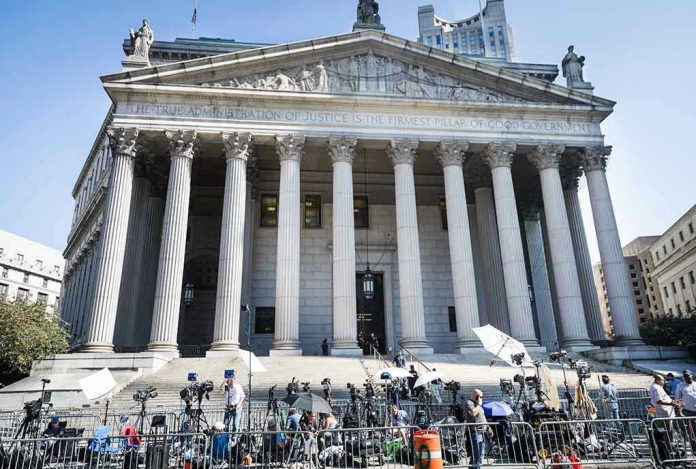
On verdict day, jurors were not asked to decide whether OpenAI is a hero, a sellout, or something in between. They were asked whether Musk waited too long to complain. Reporters outside the courthouse described a clean, blunt answer: the jury said the claims were barred by the statute of limitations, and Judge Rogers was expected to adopt that finding.[1][2] Put plainly, they concluded Musk knew enough, early enough, that he had to sue years sooner or forever hold his peace.
Federal law generally gives only a short window—often three years—to bring claims like the ones Musk asserted.[1][2] Jurors heard about emails and messages suggesting Musk understood OpenAI’s evolving direction and its deepening relationship with Microsoft well before that deadline.[1] Once they accepted that timeline, the rest of the case became legally irrelevant. Commentators stressed that this was not a vote of confidence in OpenAI’s virtue so much as an enforcement of basic legal discipline: if you want the courts to referee your grievance, you cannot hit snooze for half a decade and expect sympathy.
The Awkward Evidence About Musk’s Own For‑Profit Ambitions
Trial coverage hinted at why Musk’s team faced an uphill battle on the story of sudden betrayal. Discovery reportedly uncovered emails where Musk himself pushed, as early as 2017, to turn OpenAI into a for‑profit outfit with him as chief executive and majority owner.[3] Other accounts describe discussions about moving OpenAI under Tesla’s corporate umbrella, effectively making the “pure” nonprofit a division of a public car company.[3][5] Those are not the moves of someone shocked—on principle—by commercialization.
A jury has found that tech billionaire Elon Musk waited too long to bring his lawsuit against OpenAI CEO Sam Altman, throwing out the suit that claimed Altman had unlawfully enriched himself from the organization they helped to create. https://t.co/hsiV7D43yK
— NBC10 Boston (@NBC10Boston) May 18, 2026
Witnesses also reportedly described a tense period in 2017–2018 when Musk clashed with cofounders over governance and control, including a meeting at his home that ended badly and preceded his departure from the board.[3][5] That pattern aligns with a more ordinary, less romantic story: powerful people fought over who would own and steer a promising artificial intelligence lab, and one of them lost the internal battle. For readers who value personal responsibility and clear contracts, the evidence cuts against the idea that Musk was a naïve benefactor duped by scheming technocrats.
What This Verdict Really Says About Power, Promises, And AI
Because the jury ruled on timing instead of substance, both sides will spin the outcome. Musk’s allies will say the court “never said he was wrong,” only that he was late. OpenAI’s supporters will emphasize the “not liable” language and the unanimous verdict as a vindication.[2] The truth, based on the limited public record, sits in between: the jury treated the case as a stale grievance by a sophisticated insider who knew the score and chose litigation after the fact, not when it might have protected the mission he now invokes.[1][2][5]
For the rest of us, the lesson reaches far beyond one billionaire feud. Silicon Valley loves lofty mission statements, but American courts care about documents, dates, and defined duties more than press releases. If a project claims to “benefit all humanity” but quietly reserves the right to pivot, early participants who genuinely care about the mission must insist on clear, enforceable terms. Otherwise, the mission becomes a story for fundraising and recruitment, not a guardrail that judges will enforce when the money and power shift.
How Ordinary Citizens Should Read The AI Power Struggle
Americans who distrust both government and big tech should view this verdict as a warning, not a reassurance. A single jury did not settle whether OpenAI’s current path makes artificial intelligence safer or more dangerous; it only decided Musk was not the right plaintiff, at the right time, to raise the alarm.[1][2] The deeper question—who controls the systems that will increasingly shape our information, jobs, and security—remains wide open and largely decided in boardrooms, not courtrooms.
From a common‑sense, conservative standpoint, the case reaffirms three points. First, the rule of law still applies to the powerful; deadlines matter, even for Elon Musk. Second, citizens cannot outsource moral oversight of artificial intelligence to warring billionaires with competing business interests. Third, if we want institutions that truly prioritize human safety and liberty over profit, we have to demand transparent governance and hard legal constraints, not just visionary speeches and glossy “for humanity” slogans.
Sources:
[1] YouTube – LIVE: Courthouse after Elon Musk loses lawsuit against OpenAI
[2] YouTube – Musk To Appeal OpenAI Verdict: Lawyer Says ‘War’ Is ‘Not Over’
[3] Web – Musk v. Altman et al – Law360