A $1.8 billion “anti-weaponization” fund meant to prove the justice system is fair may end up proving the opposite.
Story Snapshot
- Senate Republicans delayed a major immigration and security funding bill after a closed-door clash over the Justice Department’s new “anti-weaponization” fund.[1][2][3]
- The $1.8 billion pool stems from a settlement of Donald Trump’s $10 billion lawsuit against the Internal Revenue Service, but the detailed rules remain secret.[1][3]
- A five-member commission, mostly chosen by Acting Attorney General Todd Blanche, would control payouts with limited direct congressional oversight.[3]
- Conservatives now face an uncomfortable question: can you fight “lawfare” with a giant political restitution fund without creating a slush fund for favorites?[1][3]
How A Little-Known Fund Blew Up A Big Republican Priority
Senate Republicans arrived on Capitol Hill expecting to muscle through a party-line immigration enforcement bill stuffed with money for Immigration and Customs Enforcement and the Border Patrol.[1][2][3] Instead, they walked out early for Memorial Day recess, their signature security push derailed by something most voters had never heard of forty-eight hours earlier: the Department of Justice’s “anti-weaponization” fund. The pivot was not theatrical; it reflected genuine alarm about how this money could be spent and who would control it.[1][2][3]
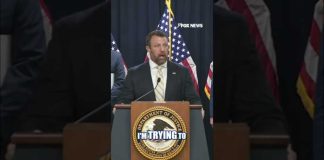
Acting Attorney General Todd Blanche sat at the center of the storm. After facing skeptical public questioning in Senate hearings, he headed into a closed-door lunch with Republican senators to sell the fund as a remedy for people who claim they were targeted for political reasons under the Biden administration.[2][3][4] For two hours he was grilled about legal authority, oversight, and whether January 6 offenders could ever see a dime. When the doors opened, the vote on the immigration bill was dead for now.[1][2][3]
Inside The Fund’s Murky Design And Settlement Roots
According to public reporting, the fund is not some free-floating pot discovered behind a file cabinet.[1][3][4] It arises from a settlement of Trump’s $10 billion lawsuit claiming the Internal Revenue Service and Justice Department “weaponized” federal power against him and his allies.[3] Instead of cutting a single check to one plaintiff, the administration proposed a $1.7 to $1.8 billion pool to pay people who allege they were politically targeted by Biden-era prosecutions and investigations.[1][3][4] The money would come from an existing federal judgment account that already pays settlements and court judgments.[1]
The structure, as best anyone outside the executive branch can see it, centers on a five-person commission housed inside the Justice Department.[3] Four commissioners would be selected by Blanche, with a fifth chosen in consultation with Congress, and the president would retain the power to remove members.[3] That design allows the administration to claim there is a process, not raw presidential discretion. Yet with no publicly released statute or settlement text, senators are being asked to trust a commission they cannot yet audit, amend, or meaningfully oversee.[1][3]
Republican Revolt: Guardrails, Jan. 6, And The “Mortgage And Groceries” Test
Louisiana Senator Bill Cassidy cut through the legalese with a line that will land with anyone trying to keep a household afloat. Voters, he argued, worry about “paying their mortgage or rent, affording groceries and paying for gas, not putting together a $1.8 billion fund for the president and his allies to pay whomever they wish with no legal precedent or accountability.”[1] He insisted that if a settlement of this magnitude is necessary, the administration should bring it to Congress and let legislators decide how, and whether, to pay.[1]
Senate Majority Leader John Thune did not reject the concept outright, but he made clear that Republican support is contingent on “guardrails” that do not yet exist.[1][3] Other senators voiced more specific fears: that the fund could quietly compensate people who never could have won in court, or even individuals convicted of violent acts, including some January 6 rioters.[1][3] Blanche reportedly told one senator privately that no one who assaulted police on January 6 would receive a settlement, but that assurance never appeared in the official Justice Department memo circulated afterward, which undermined confidence rather than restoring it.[1]
When Fighting “Lawfare” Starts To Look Like Political Payoffs
Supporters of the fund frame it as long-overdue justice for Americans who believe the previous administration used the Internal Revenue Service, prosecutors, and national security powers as political weapons.[1][3][4] That argument resonates with many conservatives who have watched agencies wander far beyond their core missions. A compensation mechanism for people genuinely wronged by politicized prosecutions is not crazy in theory. The problem is that theory does not write checks; opaque commissions do. Without clear eligibility rules, audit trails, or appeal rights, the door opens to the very favoritism conservatives have long condemned.
GOP SENATORS REBEL AGAINST TRUMP, DELAY KEY VOTE OVER $1.8B 'ANTI-WEAPONIZATION' FUND
Senate Republicans derailed a vote on immigration crackdown funding, furious over a DOJ push for a fund to pay alleged victims of political persecution. Tensions flared as acting AG Todd…
— STOCK DUTY (@stock_duty) May 22, 2026
One red flag already landed in federal court: a group of Capitol Police officers who defended the building on January 6 sued to block the fund, arguing it could reward extremists convicted of violent crimes.[1] Whether that claim ultimately holds up matters less, politically, than the fact that it is plausible on the current public record. Conservatives have spent years warning that executive-branch “slush funds” allow presidents of both parties to bypass Congress and shower money on aligned causes. Creating a massive, bespoke pool tied to one president’s grievance suit only reinforces that concern.[1][3]
What Conservatives Should Demand Before A Dollar Leaves The Treasury
The administration argues that this package fits within existing settlement authority and the already appropriated federal judgment fund.[1][3] That may be technically correct, but legality is a floor, not a standard, for wise governance. A conservative approach would insist on three basics before any payouts: first, publication of the full settlement and draft statutory language so Congress and the public can see what is actually being authorized; second, a statutory ban on payments to anyone convicted of violent offenses, including assaults on law enforcement; and third, independent auditing and regular reporting to Congress.[1][3]
Republicans now have leverage because their votes are needed to move unrelated but important priorities like border security funding.[2][3] Using that leverage to demand transparency and limits is not obstruction; it is exactly what the separation of powers is supposed to look like. If the White House believes the fund is truly about justice rather than patronage, it should welcome the chance to codify safeguards. If it resists, that tells conservatives everything they need to know about whether this “anti-weaponization” experiment deserves another taxpayer dollar.
Sources:
[1] Web – GOP senators balk at Trump’s $1.8-billion ‘anti-weaponization’ fund …
[2] YouTube – Senate GOP delays vote to fund immigration agencies amid DOJ …
[3] Web – Senate goes on break amid GOP plan to curtail Trump ‘anti …
[4] YouTube – House bill would ban use of federal money for DOJ’s “anti …