

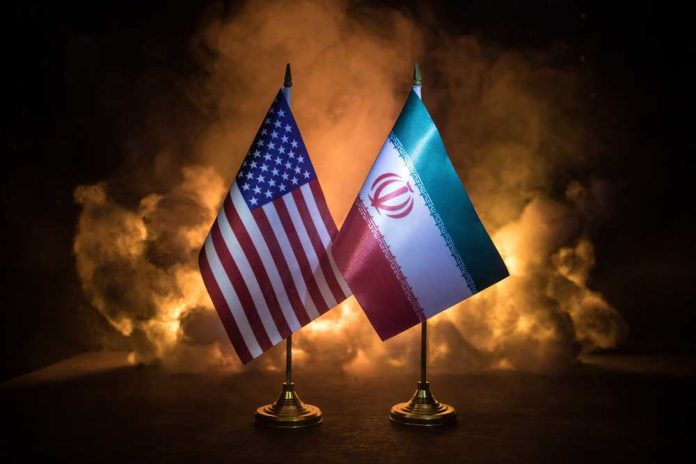
As negotiators race to end the war, the fight over Iran’s uranium stockpile could decide whether this deal protects America or papers over a dangerous threat.
Story Highlights
- Officials describe a 60-day understanding that launches talks and mentions uranium disposal, but key terms remain unsettled [1].
- Public claims clash over removing Iran’s highly enriched uranium, raising hard questions on verification [7].
- Peace track aims to reopen the Strait of Hormuz and calm markets while nuclear specifics move to later rounds [3].
- Arms-control history shows headline deals often defer the toughest technical checks and timelines [15].
What U.S. Officials Say the Deal Would Cover
Axios reported that United States and Iranian negotiators drafted a 60-day memorandum of understanding. The text, according to United States officials, refers to disposing of highly enriched uranium and managing enrichment levels, with steps for monitoring [1]. The memorandum of understanding is tied to a broader move to end active hostilities and stabilize shipping lanes. That includes plans that would reopen the Strait of Hormuz and ease pressure on global energy flows as talks continue [3].
PBS reported that negotiators agreed to end the war and open the Strait of Hormuz, but also said the hardest nuclear topics would be discussed in later meetings [3]. That pattern tracks with prior arms talks, where leaders announce progress while experts haggle over inspection access, locations, and timelines. The current push gives breathing room for markets and diplomacy. It does not yet lock in how, when, or where uranium leaves Iran or who verifies every step [15].
The Sticking Point: Iran’s Stockpile and Verification
CBS reported inspectors believe Iran holds about 970 pounds of uranium enriched to 60 percent, which is close to bomb-grade if further enriched [7]. The report also described Iranian resistance to surrendering that stockpile. That tension clashes with claims that removal details are already set. Real removal needs a clear chain of custody, sealed containers, and agreed destinations. It also needs snap inspections and tracking to prove material did not move or get replaced [7].
Arms control experts warn that removal is only one challenge. Inspectors also need ongoing access, baseline inventories, and answers about undeclared sites. The Arms Control Association notes that investigators have probed gaps in Iran’s past declarations, which complicates any future audit or timeline claims [11]. If inspectors lack access, paper promises will not stop a secret restart. Strong terms must define sites, sampling, cameras, and penalties for noncompliance [11].
Why Timing and Clarity Matter for U.S. Security
Negotiators appear to be using a two-stage approach. The first stage lowers the risk of war and protects shipping. The second stage settles technical nuclear steps with inspectors and deadlines [3]. That approach can work if the second stage is fast, strict, and public. It becomes risky if vague terms linger while oil sales and cash relief flow. Clear sequencing should tie any relief to verified nuclear steps, not to promises made without proof [15].
Conservatives remember the last decade well. The United States left the 2015 Iran deal in 2018, arguing it failed to stop missiles, terror funding, and sunset traps that let limits expire [6]. Today’s talks must not repeat those flaws. Any memorandum of understanding should state in plain terms where uranium goes, who escorts it, which inspectors watch it, and what happens if Iran stalls. America needs transparency that a high schooler can read and verify with public reports [1].
What to Watch Next: Tests of a Real Deal
Watch for the written text on three items. First, a dated schedule for removing highly enriched uranium, with a named destination and third-party verification on every leg of transport [7]. Second, continuous monitoring of all enrichment sites, known and suspected, with surprise inspector access and environmental sampling [11]. Third, automatic snapback penalties if Iran blocks an inspection or exceeds caps. If those items are missing or fuzzy, the risk to U.S. security and allies stays high [15].
Sources:
[1] Web – Removal of Iranian nuclear materials to be worked out as war deal …
[3] YouTube – Iran’s deputy FM confirms deal with US to end the war …
[6] YouTube – US and Iran reach peace deal on ending war, opening …
[7] Web – United States withdrawal from the Iran nuclear deal – Wikipedia
[11] Web – Nuclear program of Iran – Wikipedia
[15] Web – 2025–2026 Iran–United States negotiations – Wikipedia