The real issue in Trump’s attack on Big Oil is not whether gasoline is expensive; it is whether higher crude profits, slower pump-price relief, and the politics of energy can be collapsed into the single word “gouging.” The evidence shows a president pressing oil companies to cut retail prices, companies defending themselves with market-lag logic, and a public argument that is as much about power as it is about prices.
Key Points
- Trump has repeatedly accused major oil companies of failing to lower gasoline prices quickly enough and has called for a DOJ investigation.
- The strongest public evidence so far is an accusation and an inquiry announcement, not a legal finding of unlawful price gouging.
- Oil companies’ defenses rest on the complexity of crude-to-pump transmission, where taxes, refining, distribution, and retail margins all matter.
- The political appeal of this fight is obvious: high pump prices are visible, emotionally potent, and easy to personalize, even when the underlying economics are not.
What Trump Is Actually Saying About Gasoline Prices
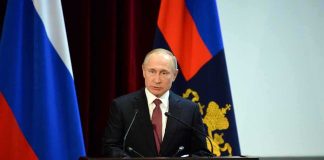
Trump’s complaint has been consistent in its basic structure. He says oil prices have fallen faster than gasoline prices, that consumers are paying too much at the pump, and that companies are keeping the difference instead of passing savings through to drivers. In late June, he said he had instructed the Department of Justice to look into oil companies for not lowering gasoline prices in line with weaker crude prices; in early August, he sharpened the attack by saying Exxon Mobil and Chevron were “making too much money” and should “give some of that back to the public.”
That framing matters because it is narrower than a broad accusation that every high gasoline price is proof of fraud. Trump is making a pass-through claim: crude costs fell, so retail prices should have followed more quickly. The argument is politically powerful because it sounds concrete and intuitively fair. But it is also only one piece of the gasoline price chain, and the chain is where the real dispute begins.
Why Pump Prices Do Not Move in Lockstep With Crude Oil
Gasoline is not priced like a direct commodity transfer from oil field to driveway. The pump price contains crude input costs, but also refining, transportation, blending, storage, taxes, station overhead, and local competitive conditions. That is why even Reuters and Politico, while reporting Trump’s accusation, describe the issue as a question of prices not falling “commensurate” with crude declines rather than as proof that producers alone control the final number on the sign. The mismatch Trump highlights can be real without proving unlawful conduct.
This is the central technical point that often disappears in political combat. Major oil producers are not the same thing as retail gasoline sellers, and the price shown to drivers is usually set downstream, often by independent station owners rather than the producing companies themselves. That does not make producers irrelevant; it means the causal chain is layered. If crude falls today, the retail price may still lag because retailers bought inventory earlier, refiners are working through contracts and margins, or regional logistics remain tight. A lag is not automatically a scam.
The Evidence So Far Supports a Political Inquiry, Not a Legal Finding
The public record currently supports one solid conclusion: Trump ordered an investigation. It does not yet support a finding that the companies committed unlawful gouging. Reuters, AP, ABC News, and CNBC all report the investigation announcement, but none of those accounts includes a charging document, court ruling, regulatory finding, or forensic audit establishing illegality. That distinction is not a technicality; it is the difference between suspicion and proof.
Trump’s own rhetoric also reveals the limits of the accusation. His language is about a mismatch between crude and pump prices, which implicitly acknowledges that several intermediating forces sit between the two. In other words, he is not presenting a documented case that Exxon, Chevron, Shell, or BP directly set the national retail price. He is asserting that they are benefiting from a delay or spread that should be narrower. That may be a fair political criticism, but it is not the same as establishing price gouging under a legal standard.
Why Big Oil’s Profit Headlines Resonate So Powerfully
The reason this argument lands so hard is that oil-company profits are easy to read as moral evidence, even when they are not a complete economic explanation. Reuters reported that U.S. oil companies were headed for their strongest quarterly profits in years, and Trump seized on that fact by naming Exxon Mobil and Chevron and demanding that they cut the retail price for consumers. Strong earnings make for a vivid contrast with households feeling squeezed at the pump. That contrast is politically devastating, whether or not it proves wrongdoing.
But profit is not the same thing as pump-price control. A company can post very large earnings because of upstream production, refining spreads, trading gains, or a favorable commodity cycle; those profits do not automatically mean it is setting retail gasoline prices in the exact way critics imagine. That is why the absence of segment-level filings, margin breakdowns, and station-level pricing data leaves the public argument rhetorically strong but analytically incomplete. High profits are relevant. They are not dispositive.
Trump blasts Exxon, Chevron for making 'too much money,' demands lower gasoline prices https://t.co/doHtIfc1tX https://t.co/doHtIfc1tX
— Reuters (@Reuters) August 3, 2026
The Politics of Blame Is as Old as Gasoline Politics Itself
This is a familiar American ritual. When gasoline prices rise, presidents look for a visible culprit, and oil companies become the easiest target because their names are recognizable and their profits are headline-friendly. Industry responses follow an equally familiar script: the price increase is said to reflect supply conditions, refining constraints, taxes, and the normal lag between commodity markets and retail pricing. The dispute persists because both sides are drawing on real parts of the same system.
The present episode is especially revealing because it mirrors earlier energy-politics patterns almost exactly. Reuters and CNBC describe the administration in contact with oil executives and pressing them to boost supply, while Trump publicly demands lower prices when conditions loosen. That is not hypocrisy so much as the recurring logic of energy politics: when prices are high, officials want visible relief; when prices ease, they want credit. Oil companies, meanwhile, want the public to understand that gasoline is a downstream product shaped by many variables, not just crude costs.
What Should Be Watched Next
The meaningful next evidence would be technical, not theatrical. A serious answer would require a crude-to-retail pass-through analysis using benchmark crude, wholesale rack prices, station-level retail data, taxes, regional distribution costs, and refinery margins. Reuters’ reporting gives the political frame, but not that forensic decomposition. Until that kind of analysis is public, the strongest statement one can make is narrower than Trump’s rhetoric: he has identified a plausible price-lag grievance, not proven corporate gouging.
That narrower conclusion is still consequential. It means the dispute is best understood as a collision between political pressure and market structure. Trump is using the oldest and most effective energy-political weapon available: telling companies with visible profits that they owe consumers cheaper fuel. The companies are relying on the oldest and most durable defense in the sector: gasoline pricing is downstream, messy, and not controlled by crude alone. Both arguments can be true at once. The question is how much of the spread is normal market delay, and how much is windfall.
Sources:
cbsnews.com, reuters.com, politico.com, youtube.com, finance.yahoo.com, wsj.com, abcnews.com