

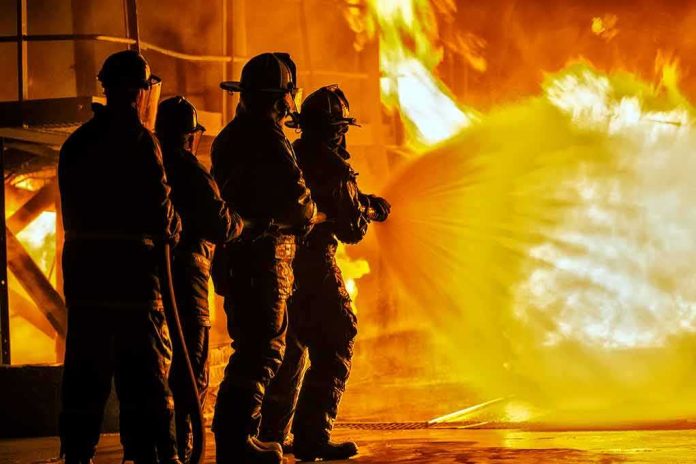
A training fire that erupted on a Saturday afternoon in central Alberta has become one of the deadliest peacetime incidents in the modern history of Canada’s military, and the way officials handled the first 24 hours of disclosure offers a useful lesson in how such tragedies are actually confirmed, not just reported.
Key Points
- Prime Minister Mark Carney confirmed four service members died and dozens more were seriously wounded in a fire at CFB Wainwright, Alberta, with next of kin already notified.
- The fire ignited in the base’s training area at roughly 4 p.m. local time on October 17 and spread rapidly beyond its boundaries.
- Canadian military officials said there is no indication the fire resulted from terrorism, while the precise cause remains under active investigation.
- An early, source-based report of seven deaths preceded the official confirmed count of four, illustrating how casualty figures evolve during a live emergency response.
- CFB Wainwright, one of Canada’s largest live-fire training installations, has an unusually long record of operating without a mass-casualty incident of this scale.
What happened at CFB Wainwright
The fire began within the training area of Canadian Forces Base Wainwright, roughly 200 kilometers southeast of Edmonton, at approximately 4 p.m. local time on Saturday, October 17. It spread quickly beyond the training grounds, prompting a large-scale emergency response involving the Canadian Armed Forces, Alberta provincial authorities, and the RCMP, which sent resources to assist at the base. By the following day, Prime Minister Carney had confirmed the human toll directly: four service members killed, their next of kin already notified, and dozens more seriously wounded. That is the stabilized, official account, delivered by the head of government rather than filtered through anonymous sourcing — a distinction that matters in the early hours of any mass-casualty event.
Coverage across Canadian and international outlets converged quickly on the same core facts: location, timing, and the broad scale of casualties. Reporting also identified personnel from the Princess Patricia’s Canadian Light Infantry among those training at the base when the fire broke out, alongside other army regiment members, though the identities of the four deceased have not been publicly released. That withholding is standard practice — identification follows next-of-kin notification and formal confirmation, not public disclosure timelines — and it does not undercut the reliability of the casualty figures the prime minister has already confirmed.
Why the casualty count moved from seven to four
One detail worth understanding, because it is the kind of thing that erodes public trust when misread, is that early reporting cited sources putting the death toll at seven before Carney’s confirmed figure of four took hold. This is not a contradiction that undermines the official account; it is the normal arithmetic of disaster reporting. In the first hours after a mass-casualty event, categories blur — people feared dead, people unaccounted for, people in transit to hospitals, and people formally confirmed deceased are not the same count, and early sourcing often conflates them. The Department of National Defence initially declined to confirm specific numbers while families were still being notified, a sequencing that protects grieving relatives from learning of a death through a news broadcast rather than a uniformed officer at the door. The confirmed figure of four, delivered by the prime minister once notification was complete, is the authoritative number.
How CFB Wainwright functions and why that matters here
CFB Wainwright is not a garrison in the conventional sense; it is one of the Canadian Army’s primary maneuver-training areas, a sprawling tract of range land used to run units through combined-arms exercises — artillery, armor, infantry, and increasingly drone-integrated operations — before deployment readiness is certified. Bases built for this purpose function as a “finishing school,” where live ammunition, vehicles, and fuel infrastructure operate in close proximity under strict range-control protocols precisely because the consequences of a breach are severe. That context explains both the scale of what happened and the rarity of it: incidents resulting in multiple fatalities during Canadian live-fire training are exceptionally uncommon, which is part of why officials and outside observers alike have described this as one of the worst peacetime tragedies for Canada’s military on domestic soil.
What remains open, and what doesn’t
The Canadian Armed Forces have been explicit on one point: there is no indication the fire resulted from terrorism. That statement rules out one category of explanation without resolving the actual cause, which officials say remains under investigation. Whether the fire originated from training activity, equipment failure, fuel or ammunition handling, or an environmental factor is not yet established in the public record, and no fire-origin report, military board of inquiry, or RCMP conclusion has been released. That is a normal feature of any serious investigation involving multiple deaths — thorough cause determination takes weeks or months, not days — and it should not be mistaken for ambiguity about the facts officials have already confirmed: the location, the timing, the death toll, and the scale of the injured.
NEW: Alberta premier says 39 people hospitalized, at least 19 in critical condition after fire at Canadian military base
— Darren McCaffrey (@darrenmccaffrey) October 18, 2026
What this means going forward
For the families of the four service members, for the dozens recovering from serious wounds, and for a military community that trains routinely with live fire under protocols designed to prevent exactly this outcome, the coming investigation will matter more than any news cycle. Expect a staged release of information: first operational and safety findings restricted to military channels, then a public accounting once next-of-kin interests and any criminal or safety liability questions are resolved. The pattern is consistent with how Western militaries handle training fatalities generally — confirm casualties fast, withhold cause until it’s actually known, and resist the temptation to speculate publicly before an investigation closes. That is precisely the posture Canadian officials have taken here, and it is the right one.
Sources:
youtube.com, apnews.com, ctvnews.ca, cbc.ca, thecanadianpressnews.ca, latimes.com, upi.com