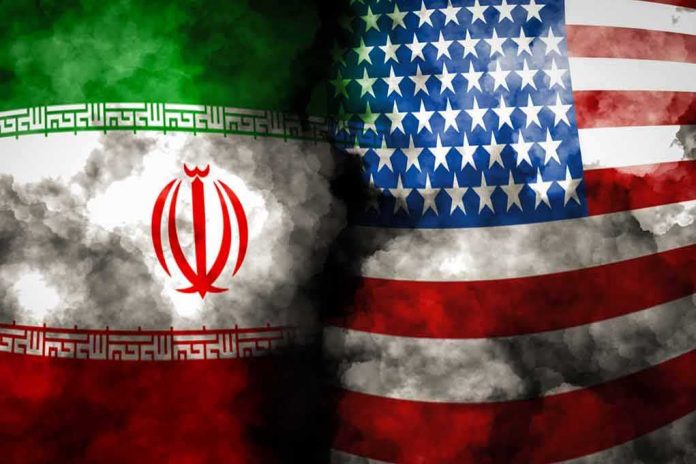
When a foreign government declares victory over a sitting American president, the claim deserves scrutiny on two separate levels: did the event it points to actually happen, and does the event mean what the government says it means. In the case of Iran’s response to the November 2026 midterm elections, the first question has a clear answer and the second does not.
Key Points
- Senior Iranian officials, including Supreme National Security Council Secretary Mohsen Rezaei, Parliament Speaker Mohammad Baqer Qalibaf, and judiciary chief Gholam-Hossein Mohseni-Ejei, publicly framed the 2026 U.S. midterm results as a political defeat for President Trump tied to the Iran conflict
- Democrats won control of both the Senate and House, a result widely described as a major setback for Trump and Republicans
- Trump himself called it “largely true” that the Iran war contributed to the losses, while continuing to defend the underlying policy
- Iran’s own Mojtaba Khamenei warned that American hostility toward Tehran would continue regardless of which party holds Congress, undercutting the idea of a clean strategic win
- Historical precedent shows wartime midterm losses rarely trace to a single cause, making Iran’s “we did this” framing a political claim rather than a demonstrated fact
What Iranian officials actually said
The record here is not ambiguous. On November 4, 2026, Mohsen Rezaei posted on X that “the Iranian nation handed Trump a strategic defeat on the battlefield and in the Hormuz — and a POLITICAL DEFEAT in Washington.” Qalibaf followed with his own message interpreting the vote as a referendum on the conflict: “Conscience or the cost of living, Americans said NO TO WAR, and we endorse this message.” Mohseni-Ejei went further still, telling Telegram followers that Trump “was defeated both in war and in politics” and promising further defeats to come. These are not anonymous leaks or disputed translations — they are on-the-record statements from three of the most senior figures in Iran’s security, legislative, and judicial establishment, published the same day the results came in.
That timing matters. The statements arrived as returns were still being finalized, which tells you this was coordinated messaging rather than a considered policy assessment. Governments that want to shape a narrative move fast, before the dust settles and before domestic analysts in the target country can offer competing explanations. Iran’s leadership understood exactly what story it wanted told about the American election, and it told that story within hours.
The electoral fact underneath the rhetoric
Strip away the framing and an actual event sits underneath it: Democrats took control of both chambers of Congress, a result multiple outlets described as a severe rebuke to the president and his party. Trump’s own reaction removed any doubt about whether the war was part of the political cost. Asked directly, he called it “largely true” that the Iran conflict contributed to the defeat, adding “part of it was Iran” — while in the same breath insisting he would pursue the same policy again because, in his words, Iran must not be allowed a nuclear weapon. That combination — acknowledging the political price while refusing to change course — is itself a telling data point. It is the posture of a leader who believes the policy was correct even if it was costly, not one who views the election as proof the policy was wrong.
Where the Iranian claim overreaches
Here is where the two levels of scrutiny diverge. That Democrats won is a fact. That Tehran “handed” Trump this outcome is an interpretation, and a self-serving one at that. Nothing in the public record demonstrates that Iranian action — military, diplomatic, or informational — changed a single American vote. Voters respond to gas prices, grocery bills, casualty counts, and a general sense of whether a war is worth its cost; a hostile foreign government declaring credit for domestic discontent is a propaganda reflex as old as warfare itself. Incumbent parties lose congressional seats during unpopular wars with striking regularity, and the loss reflects the domestic political cost of the war, not the adversary’s battlefield cunning. Treating “Americans rejected the war” and “Iran defeated America” as the same sentence is where the Iranian framing stretches past what the evidence supports.
It is also worth noting that Iran’s own leadership did not fully commit to the triumphant version of events. Mojtaba Khamenei reportedly warned that American hostility toward Iran would persist no matter which party controlled Washington — an acknowledgment, buried inside the celebration, that a change in House and Senate leadership does not automatically translate into a change in strategic posture toward Tehran. That is an important internal check on the “political defeat” framing: if Iran’s own supreme leadership doesn’t expect the pressure to lift, the victory being claimed publicly is considerably narrower than the rhetoric suggests.
The historical pattern this fits
None of this is new. Wartime midterms have punished American presidents before without the war’s adversary having engineered the outcome. Franklin Roosevelt’s Democrats suffered significant losses in the 1942 midterms, held less than a year after Pearl Harbor, amid home-front frustration over rationing, casualties, and wartime disruption — a result scholars treat as contingent on timing and circumstance rather than inevitable, and certainly not a product of Axis political strategy. The structural lesson holds across eight decades: a sitting president’s party is vulnerable in any midterm during an unpopular or costly conflict, because voters use the only lever available to them — the ballot — to register dissatisfaction with decisions made above their heads. Iran did not invent that dynamic in 2026; it simply narrated it in the most self-flattering terms available.
JD VANCE BLAMES IRAN WAR FOR REPUBLICAN ELECTION LOSSES. WHAT DO VOTERS ACTUALLY SAY?
UPDATE (NOV. 4, 2026): Vice President JD Vance says the war with Iran is the main reason Republicans suffered major losses in Tuesday's midterm elections.
President Trump has also acknowledged…
— Receipts Matter (@ReceiptsMatter) November 4, 2026
What it means going forward
The practical question is whether a Democratic-controlled Congress produces policy outcomes that actually benefit Tehran — sanctions relief, war-powers restrictions, or reduced appropriations for Iran-related military operations. That remains unresolved and will be decided in committee rooms, not in triumphant social media posts. Until legislation moves, Iran’s claim of a “political defeat” for Trump describes a mood, not a mechanism. The election result is real and consequential; the strategic victory Tehran is claiming on top of it is a story still being told, by the party with every incentive to tell it.
Sources:
thegatewaypundit.com, usnews.com, abc7.com, npr.org, apnews.com