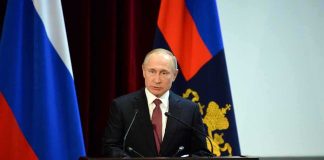

Tucker Carlson, once a staunch Trump ally, now claims the President possesses ‘spellbinding’ and possibly ‘supernatural’ qualities that cast a spell on Americans, raising alarms about manipulated leadership in Trump’s second term.
Story Snapshot
- Tucker Carlson describes Trump as having spellbinding, potentially supernatural influence that weakens judgment and fosters compliance.
- Carlson’s break with Trump stems from the President’s February decision to attack Iran alongside Israel, which he views as surrendering U.S. sovereignty.
- Carlson denies past Antichrist remarks about Trump despite video evidence, exposing contradictions in his critique.
- This rift highlights growing media divisions and questions about external influences on Trump’s America First agenda.
Carlson’s Shift from Supporter to Critic
Tucker Carlson supported Donald Trump’s first presidency but changed course after Trump’s February decision to join Israel in attacking Iran. Carlson opposed this military action, stating he regrets his prior backing. On his show, he now criticizes the Trump administration regularly. He argues Trump’s close ties to Israeli Prime Minister Benjamin Netanyahu turn the President into a “slave” to foreign interests. This framing suggests Trump lacks independent decision-making, prioritizing overseas agendas over American priorities. Conservatives who value sovereignty watch this evolution closely, wondering if allies like Carlson expose real vulnerabilities in leadership.
Spellbinding Qualities and Supernatural Claims
In a New York Times interview, Carlson described Trump as possessing “spellbinding” qualities, hinting at something “supernatural.” He claimed Trump casts a literal spell that confuses people, weakens their judgment, and makes them compliant. Carlson said the spell shattered for him after the Iran strikes, revealing Trump’s true nature. This metaphysical language departs from standard political analysis, framing Trump’s charisma as otherworldly manipulation. For conservatives frustrated with elite control, such rhetoric echoes concerns about unseen forces steering the nation away from founding principles of self-reliance and limited foreign entanglements.
Contradictions Undermine Credibility
Carlson denied in the interview calling Trump the Antichrist, despite video evidence showing him questioning if Trump could be. This denial creates a clear contradiction, fueling doubts about his consistency. Once a trusted voice for many on the right, Carlson’s flip exposes tensions within conservative media. His audience, including Trump supporters, now questions his reliability. Both left and right share frustrations with leaders who seem more loyal to power than people, seeing this as another sign of deep state divisions eroding trust in institutions.
This public break influences perceptions among Carlson’s viewers, many of whom backed Trump’s return to power. Short-term, it may sway opinions on foreign policy. Long-term, it shifts media dynamics, with former allies using dramatic terms to critique the administration. Trump loyalists defend his decisions as strong leadership, while critics like Carlson warn of compromised autonomy. Amid bipartisan distrust in government, this feud underscores how even unified GOP control struggles against internal rifts and external pressures.
https://twitter.com/GeorgeMentz/status/2051452403137085852
Affected parties include Trump administration officials facing heightened scrutiny and the broader media ecosystem adapting to realignments. Conservatives over 40, weary of globalism and endless wars, find validation in Carlson’s sovereignty warnings. Yet his supernatural claims risk alienating those seeking factual discourse. With Republicans holding Congress, Trump’s team pushes America First despite such critiques. This episode reveals the challenge of maintaining unity when personal breaks amplify elite frustrations shared across the political divide.