

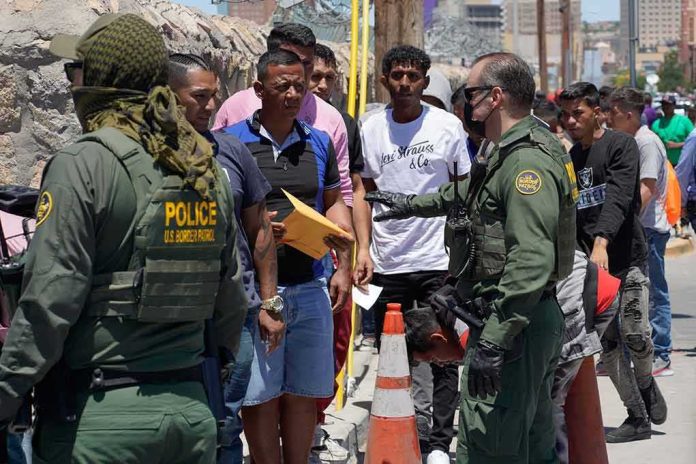
Freeport is the latest data point in a national argument that has been running since January 2025: is immigration enforcement in the second Trump administration a scalpel aimed at criminal offenders, or a blunt instrument that sweeps up whoever happens to be standing nearby? Both descriptions are being applied, honestly and by credible sources, to the same string of events on Long Island — and understanding why requires looking past the headline and into how ICE structures an operation versus how a community experiences one.
Key Points
- Federal agents have carried out repeated enforcement actions in Freeport and elsewhere in Nassau County since at least June 2025, with local officials confirming arrests on the ground.
- ICE describes these as “routine, daily targeted operations” against criminal aliens, fugitives, and illegal re-entrants, not indiscriminate sweeps.
- Freeport residents, advocates, and some local lawmakers describe a different pattern — apartment-complex checks, bus-stop stakeouts, and allegations of racial profiling that catch bystanders alongside targets.
- The Freeport episode fits a broader, well-documented cycle across the New York metro area, from Canal Street to the Hudson Valley, in which the same operation is labeled a “targeted action” by federal officials and a “raid” or “sweep” by local reporting.
- New York’s Attorney General has launched a portal for residents to document ICE activity, reflecting how much of this dispute now turns on competing evidence and classification rather than a single contested fact.
What Happened on the Ground in Freeport
Village-level confirmation is the sturdiest fact here. The Freeport mayor told News 12 that ICE carried out operations in the village, corroborating similar activity confirmed by the Hempstead Village mayor the same week. Community monitoring groups logged specific sightings — agents taking an individual into custody on Babylon Turnpike, another detention outside a deli on the same corridor — dated to early July 2025. Long Island Herald reporting places the start of this activity in early June, describing early-morning checks at apartment complexes and agents staking out bus stops in the months since. None of this is seriously disputed; it is corroborated across a local newspaper, a broadcast affiliate, and municipal officials speaking on the record.
What is contested is not whether agents were present, but what they were doing there. Nassau County lawmakers separately confirmed to Patch that ICE activity had escalated across the county, Freeport included, prompting public reaction from at least one county official. That escalation did not happen in isolation — it tracked a broader ramp-up of ICE enforcement across the New York City metro region through 2025, including a 41-arrest operation across the five boroughs described by ICE as targeting “criminal aliens, illegal re-entrants, and immigration fugitives”, an 80-arrest, five-day action spanning New York City, the Hudson Valley, and Long Island, and a 54-arrest sweep touching towns from Cortlandt to Rhinebeck.
The Federal Case: Targeted Operations, Not Sweeps
ICE’s own language is precise and consistent, and it is worth taking seriously rather than dismissing as boilerplate. The agency’s fact sheet on its New York-area operation states plainly that the actions were “conducted in accordance with routine, daily targeted operations” and asserts that “ICE does not conduct sweeps, checkpoints or raids that target aliens indiscriminately,” framing the effort instead around public-safety threats, including convicted criminal aliens. This is not a one-off talking point; it echoes an earlier 2025 operation in which ICE and law-enforcement partners reported apprehending 206 people described as “egregious criminal alien offenders” over a single week. Mechanically, this is how fugitive-operations teams have long worked: officers build target lists from criminal or immigration-court records, verify addresses through surveillance, and execute arrests at a known location — a bus stop, an apartment, a workplace — rather than canvassing a neighborhood door to door.
That distinction matters legally and operationally. A targeted arrest, even one that looks chaotic from the street, rests on a specific administrative or judicial basis — an outstanding removal order, a prior conviction, a fugitive alien warrant. Nassau County’s own enforcement figures give a sense of scale: ICE has said its agents have detained more than 1,600 people on Long Island, the large majority with prior convictions, with local jail capacity on pace to hold roughly 3,000 people for ICE over the course of the year. Numbers of that size are not consistent with a handful of isolated incidents; they reflect a sustained, resourced enforcement posture, which is exactly what federal officials say it is.
The Community Account: Fear, Profiling, and Collateral Arrests
Local reporting and immigrant-advocacy voices describe the same months of activity in starkly different terms. The Long Island Herald quotes a community advocate describing operations as targeting “hardworking mom and pops, neighbors and students rather than criminals,” and reporting agents conducting early-morning checks at apartment complexes and allegedly profiling individuals by race. This is not merely a rhetorical disagreement. A young Long Island man’s account of being pulled over and searched by ICE agents during a traffic stop — a U.S. citizen, according to that report — illustrates the recurring complaint that verification of status happens after an encounter begins, not before, which is precisely the mechanism by which bystanders and citizens can be swept into an operation nominally aimed at someone else. Advocacy groups tracking sightings across the region, including in Freeport and neighboring Roosevelt, document a texture of enforcement — deli stakeouts, residential checks — that reads less like a discrete target list being executed and more like a sustained presence in specific neighborhoods.
This is the recurring fault line in nearly every ICE controversy of 2025, from a chaotic Canal Street vendor sweep that drew protests and demands for answers from New York City Hall, to operations across Queens and the Bronx that prompted local demonstrations. Federal officials call the operation targeted; the people who watched it unfold call it a raid. Both descriptions can be accurate simultaneously — a target list can exist and still produce visible, disruptive activity that frightens an entire neighborhood, especially when agents in tactical gear move through commercial corridors or residential blocks that were previously undisturbed by federal enforcement at this frequency.
Why the Dispute Is Mostly About Classification, Not Contradiction
It is important to be precise about what is, and is not, actually in conflict here. No credible source disputes that ICE agents were present and active in Freeport, that arrests occurred, or that county and village officials confirmed the activity. What remains genuinely unresolved is a matter of characterization: whether the totality of stops, checks, and detentions in a given week reflects a narrowly executed target list or a wider dragnet that incidentally catches non-targets. New York’s Attorney General has responded to that uncertainty not with a ruling but with an evidence-gathering tool — a public portal inviting residents to submit photos and video of ICE activity — which is itself a tacit acknowledgment that documenting what actually happens on the ground, incident by incident, is more useful than relitigating the question in the abstract.
For Freeport specifically, the practical throughline is this: enforcement activity that began around June 2025 has continued in bursts through the fall, tracking a broader escalation across Nassau County and the wider metro region. Whether one reads that as overdue enforcement of existing removal orders against convicted offenders or as a disruptive, fear-inducing presence in immigrant neighborhoods likely depends less on any single incident and more on which set of numbers — convictions confirmed by ICE, or bystanders reported by advocates — a reader trusts as representative. The evidence supports taking both seriously, because both have held up under scrutiny so far.
Sources:
youtube.com, ice.gov, bronx.news12.com, theweek.in, military.com, patch.com, deportationtracker.live, thehill.com, ag.ny.gov, inkl.com, immigrantdefenseproject.org