Jokes aside, targeted threats from Iran’s security apparatus against U.S. leaders are real, recurring, and operational—not a matter of atmospherics or campaign bravado—because they have repeatedly crossed from rhetoric into concrete plots and criminal cases.
At a Glance
- Credible danger: U.S. courts and agencies have documented Iranian-linked plots to kill American officials, including a recent federal conviction tied to IRGC-directed assassination planning.
- Pattern, not a one-off: Tehran and its security organs have backed external operations for decades, with episodes against U.S. targets and dissidents across multiple continents.
- Public bravado vs. private posture: Leaders often downplay personal risk in public; protective protocols quietly assume the opposite.
- Separate three things: Iran’s capabilities and intent; the existence of an active plot; and the credibility of any single intelligence report.
Why the Quip Landed—and Why It Doesn’t Set Security Policy
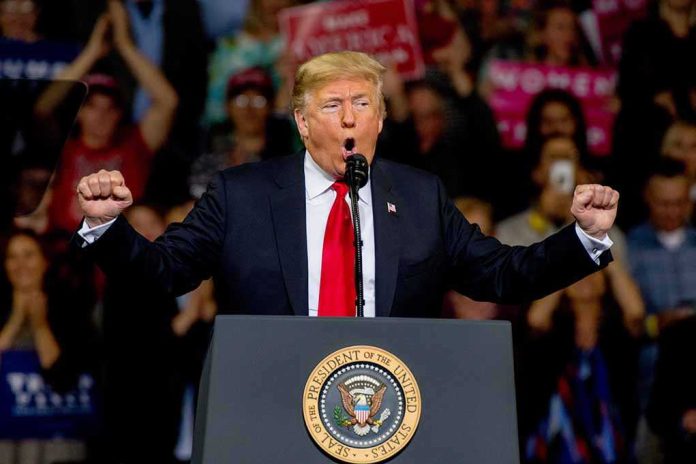
When President Trump brushed off a question about an Iranian drone threat—“I’m more worried about you”—he was performing a familiar commander-in-chief ritual: project calm, deny adversaries the theater they want, and keep the public conversation away from security specifics. Such lines read as swagger, sometimes as showmanship, but they are not the operating manual for the protective state. The manual is written by threat intelligence, case files, and long memory. It is shaped by episodes where Iranian security services or their cutouts moved beyond rhetoric to tasking, money, weapons, and travel. That corpus—not presidential quips—determines posture.
In practice, that posture has hardened because U.S. institutions have repeatedly shown that Iranian-linked actors will attempt extraterritorial retaliation, especially after moments of acute grievance. The United States therefore treats the risk to sitting and former officials as persistent and non-theoretical.
From Intent to Action: How Iranian External Operations Actually Run
Iran’s external operations typically flow from the Islamic Revolutionary Guard Corps (IRGC) and the Ministry of Intelligence and Security (MOIS). These entities recruit intermediaries—sometimes diaspora assets, sometimes criminal facilitators—to create distance between Tehran and the plot. Tradecraft varies: murder-for-hire solicitations, surveillance of targets’ routines, payment staged through digital wallets or informal hawala, and procured weapons that can be locally sourced to muddy attribution. The point is deniability without sacrificing effect. For high-value targets—senior U.S. officials—the tasking and operational security tighten, but the outlines remain familiar: measure protective patterns, look for soft circuits (homes, private travel), and test the target environment for law-enforcement presence before committing.
The United States surveils this ecosystem continuously; when it catches a live wire, prosecutions and sanctions follow. That record is the most probative evidence of capability and intent because it rests on evidence rules, not rhetoric.
The Case Law That Converts Rhetoric into Risk
The cleanest line between threat and reality is a docket and a verdict. In March 2026, a federal jury convicted Asif Merchant of murder-for-hire and attempting to commit an act of terrorism transcending national boundaries in a plot to assassinate U.S. politicians and officials. According to the FBI, Merchant acknowledged he had been sent by the IRGC to arrange political assassinations inside the United States; the Justice Department said he entered the country intending to kill President Trump. That is not chatter. It is adjudicated conduct tied to the core of Iran’s security organs, directed at the top tier of U.S. leadership.
The Merchant case sits atop a longer shelf of actions that establish continuity: Justice Department charges against IRGC-affiliated actors for murder-for-hire planning; Treasury designations targeting the IRGC-QF and MOIS for plots against U.S. officials and foreign diplomats in Washington; and a cataloged four-decade campaign of extraterritorial intimidation and assassination attempts against dissidents and state officials abroad. Each individual episode can be debated on particulars; taken together, they remove doubt about strategic intent.
Context, Not Compression: Capability, Active Plots, Specific Reports
Here is where careful thinking matters. Iran’s capability and intent to strike U.S. officials are well-evidenced over time. That does not mean every headline or intelligence whisper about an “imminent” plan is equally credible. Analysts separate three layers: first, the enduring capacity and willingness to conduct external operations; second, the existence of an active operational plan with resourcing, surveillance, and an executable path; third, the credibility of any given report about a specific plot against a named figure. News coverage often compresses all three into one dramatic narrative. Professionals do not—and neither should readers.
For example, when media report that a foreign service warned of an alleged drone plot targeting President Trump or senior officials, that may be directionally consistent with Iran’s history, yet it still requires testing for source access, corroboration, and feasibility before it drives operational posture. The record of overt threats, attempted plots, and U.S. interdictions is what sustains the baseline risk assessment, not the volume of any particular day’s chatter.
Public Messaging, Private Math
Presidents tend to minimize personal vulnerability in public. That instinct serves deterrence and domestic reassurance. But protective details—Secret Service, military counter-UAS units, and interagency fusion cells—operate on conservative math. They assume adversaries adapt and learn. Even if most drones and missiles are intercepted in open conflict, a single small, low-cost platform flown in a civilian environment can present a radically different challenge profile than battlefield volleys. Claims that 99.99% of threats are neutralized make for bracing soundbites; they do not change the physics of counter-UAS or the attacker’s search for a seam.
That is why senior officials sometimes relocate to secure installations during spikes in Iranian-linked threat reporting and why layered defenses—electronic warfare, kinetic interceptors, geofencing, and venue hardening—are now routine for presidential movements. These are tactical responses to an adversary that has demonstrated both patience and opportunism, rather than reactions to any one quote or press exchange.
What History Teaches About Consequence and Escalation
Retaliatory plots tend to cluster after moments of symbolic injury to Tehran. The 2020 U.S. strike on Qasem Soleimani created such a moment; since then, U.S. officials and agencies have detailed elevated threat activity tied to the IRGC’s external units. Sanctions actions and criminal complaints have named operators, financial facilitators, and front organizations connected to assassination planning and intimidation of dissidents and former officials. The through-line is not mystery: Iran views targeted hits abroad as an instrument that complements formal diplomacy and proxy warfare. As long as that doctrine persists inside the IRGC/MOIS playbook, U.S. security posture toward high-ranking officials will remain stringent, regardless of day-to-day public rhetoric.
Importantly, the United States does not announce every disruption. Some investigations end with quiet deportations, disrupted financing, or simple deterrence through presence. Others culminate in indictments or, rarely, jury verdicts that air the operational details. The occasional public case—like Merchant’s—serves a dual purpose: it penalizes the actor and signals to planners in Tehran that American institutions are watching closely and will attribute, even behind layers of cutouts.
How to Read the Next Headline
Three questions keep readers anchored. First, is there hard, named evidence—charges, sanctions designations, court filings—linking a plot to IRGC or MOIS actors? Second, does the report show operational steps beyond talk: surveillance, money movement, procurement, travel? Third, how does the claim fit the long pattern of Iranian external operations? When those answers line up, treat the threat as credible even if the public figure on stage smiles it away. When they do not, keep the right posture of informed skepticism. Either way, the baseline does not change: Iranian-linked external operations have targeted U.S. officials, including a sitting president, and American defenses plan accordingly.
Sources:
cnn.com, usatoday.com, gulfnews.com, edition.cnn.com, apnews.com, en.wikipedia.org, theatlantic.com, justice.gov