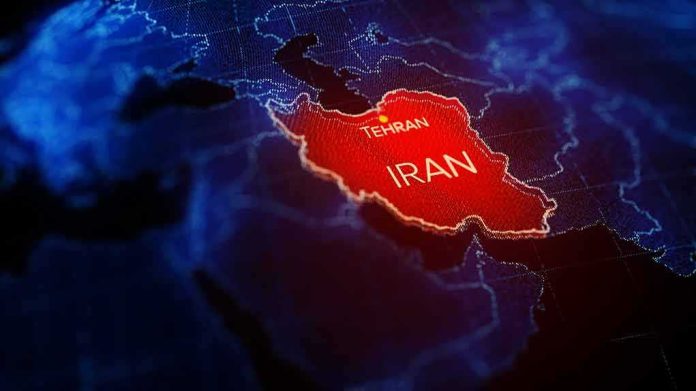
When inspectors can no longer see, governments turn to sources who can. Washington’s new, public offer of up to $20 million and possible relocation for information on Iran’s nuclear program is not a stunt; it is an intelligence instrument built for an era of obscured facilities, fractured monitoring, and a narrowing margin for error.
At a Glance
- The State Department’s Rewards for Justice program is offering up to $20 million and potential relocation for information on Iran’s nuclear facilities, equipment, and personnel.
- The bounty targets concrete intelligence gaps—locations, movements, and the human networks behind enrichment and related activities.
- Years of constrained International Atomic Energy Agency access have created blind spots; human intelligence is now the decisive variable for verification and disruption.
- The offer sits within a long-standing U.S. toolkit—legal authorities, public rewards, and quiet exfiltration—used when technical collection and inspections fall short.
What the U.S. is actually offering, and why that matters
The State Department’s Rewards for Justice (RFJ) page is explicit: up to $20 million and possible relocation for information on Iran’s nuclear program—its facilities, equipment, associated personnel (including scientists), and the movement of any of the above. That language is not a generic call for tips; it’s a targeting matrix. Facilities and equipment define where complex processes occur and what capabilities exist; named people, logistics, and movement patterns reveal how those processes are sustained and how they could be disrupted or deterred. Publicly stating relocation alongside the reward signals what Washington most wants—insider testimony with provenance, not rumor—and the U.S. government’s willingness to protect those who provide it.
RFJ is not a novelty. It is the State Department’s established platform for incentivizing critical information across counterterrorism, sanctions evasion, state-backed cyber operations, and related malign activities. In practice, RFJ rewards are paired with secure tip channels and, when warranted, resettlement mechanisms. The operational subtext is clear: if you can credibly map the hidden parts of Iran’s nuclear enterprise, Washington will pay and move you.
From safeguards to sources: how verification gaps drove an intelligence pivot
Arms control and nonproliferation regimes hinge on two complementary pillars: routine verification by inspectors and national technical means (satellites, signals intelligence) that catch what routine processes miss. In recent years, that first pillar weakened significantly in Iran. IAEA reporting and independent analysis describe a loss of access to sites, a halt to key monitoring, and unresolved questions about materials and activities that inspectors can no longer independently close. In such conditions, even sophisticated technical collection struggles to reconstruct the full picture inside dispersed, fortified complexes. That is why human intelligence—people who know what is where, who is involved, and when sensitive work moves—becomes the indispensable layer that restores context to partial data.
None of this resolves the perennial debate over Iran’s intent—capability versus decision. But it does explain U.S. method. If you cannot reliably verify suspension or compliance through instruments you once trusted, you recruit the eyes and hands inside the program to tell you what the machines and missing cameras cannot. The $20 million figure is calibrated to attract precisely that caliber of source.
What counts as valuable intelligence under this offer
Washington’s ask mirrors how nuclear programs actually function. Facilities: underground halls, tunnels, and cascades are not static; new galleries, feed points, and vaults can be added or reconfigured. Equipment: centrifuge types, enrichment stages, and balance-of-plant systems (power, vacuum, cooling) indicate both capability and vulnerability. Personnel: scientists, metallurgists, procurement officers, security heads—names, roles, travel patterns, and compartmentation practices reveal the network and its seams. Movement: transfers of UF6 cylinders, specialized alloys, vacuum components, or control systems trace supply lines and timelines. A single accurate schematic, a current org chart, or a shipment schedule can collapse months of analytic uncertainty into actionable clarity. RFJ’s wording is designed to elicit exactly these specifics.
This targeting logic also explains why relocation is offered. High-value insiders rarely provide one-off tips; they deliver sustained, corroborable streams of detail that put them at acute risk. Resettlement options are essential for persuading such sources to come forward, and for extracting them and their families once they do.
Legal and historical underpinnings of paying for nuclear intelligence
The U.S. has statutory authorities to pay for information related to illicit nuclear materials and weapons, reflecting a long-recognized need to incentivize revelations about clandestine nuclear activity that technical collection might miss. Those authorities sit alongside State’s RFJ program, which has adapted over decades to include state actors and their proxies whose activities threaten U.S. security. The point is less about precedent than about continuity: when the stakes are nuclear and the environment is opaque, rewards and exfiltration are standard tools, not improvisations.
History also shows why insider material matters. On past occasions, troves of documents and insider leads significantly reshaped assessments of Iran’s prior weapons-organized work and technical maturity. Publicly available analyses of those archives demonstrated how human-derived records can change what outside analysts believed to be true—even when inspectors and satellites had been watching for years. The current offer aims to surface the next tranche of clarifying information, this time in real time rather than retrospect.
What this does—and does not—say about U.S. goals
The reward offer is not a declaration of imminent military action; it is a statement of intelligence priority. Policymakers need to know what exists, where it sits, who runs it, and how quickly it could change. That knowledge supports multiple policy paths: tightening interdictions, shaping diplomacy from a position of clarity, enhancing deterrence by holding precise risks at risk, or—if ordered—planning targeted operations. Without that knowledge, all options are degraded; with it, miscalculation risk drops and leverage rises. In a domain where weeks can separate low- from high-enriched stockpiles and where tunnels can move faster than negotiations, granularity is strategy.
The offer also aligns with the broader shift from assumptions to proofs. Assertions of “peaceful intent” or “destroyed capability” are not operationally sufficient. Verification requires specifics: inventories, process flows, and named accountables. A public bounty is a blunt instrument, but it is an honest one about what matters—verifiable, current detail—and what Washington is prepared to exchange to obtain it.
US offers $20m reward for information about Iran's nuclear programme,
The State Department's Rewards for Justice is also offering to potentially relocate the person who provides such details.#Iran https://t.co/6Mlw8CVAYn
— प्रमोद कुमार ( Journalist ) 🕉 (@News_Politics24) November 7, 2026
Implications for allies, adversaries, and the next phase
For allies concerned about regional proliferation and escalation, the signal is stabilizing: the United States is investing in factual baselines rather than rhetoric. For adversaries, it is a warning that insider risk has been priced into American strategy; tightening compartmentation and counterintelligence will now compete with the economic and political pressures insiders face. For the nonproliferation regime, the move underscores a sobering truth: when cooperative verification falters, the burden shifts to clandestine collection and the people willing to make it possible.
Sources:
thegatewaypundit.com, rewardsforjustice.net, khan.co.kr, uscode.house.gov, isis-online.org, iaea.org