
In competitive House districts, outcomes hinge less on any single constituency and more on the arithmetic of turnout and timing; in New York’s 17th, that arithmetic ended Mike Lawler’s tenure and returned the seat to a Democrat, Cait Conley.
At a Glance
- Cait Conley defeated incumbent Rep. Mike Lawler in New York’s 17th Congressional District, flipping a seat that had changed hands twice in the past two cycles.
- Unofficial tallies from multiple major outlets aligned on the result and margin; Lawler called Conley to concede before all ballots were processed.
- Ballot-processing bottlenecks in Westchester created a lag in reporting but did not alter the outcome once counted.
- NY-17 remains a volatile, closely divided district where modest shifts in turnout and national mood have repeatedly reversed control.
What Happened and Why It Matters
Cait Conley won New York’s 17th Congressional District with roughly 52 percent of the vote to Lawler’s 48 percent, according to consistent election-night and next-day tallies reported by NPR, NBC News, and The New York Times; taken together, those outlets showed Conley at approximately 133,000 votes to Lawler’s 122,000, a mid-single-digit margin sufficient to decide the race. Lawler conceded publicly, telling supporters he had called Conley to congratulate her and acknowledged the remaining ballots would not erase her lead. In a chamber where control often turns on a handful of seats, a flip in NY-17 is not an anecdote; it is a seat-sized data point in understanding how swing districts move with national currents.
The district’s pattern amplifies the stakes. Lawler narrowly captured the seat in 2022 against then–Democratic Congressional Campaign Committee Chair Sean Patrick Maloney, then secured a more comfortable re-election in 2024. Conley’s 2026 win resets the scoreboard again, signaling that NY-17 is less a red or blue bastion than a barometer district responsive to small swings in participation and persuasion. Elite attention followed accordingly; national outlets and local press treated the contest as one of the cycle’s bellwethers, and they agreed on the final outcome once the count matured.
Mechanics of the Count: Westchester’s Bottleneck and the Result
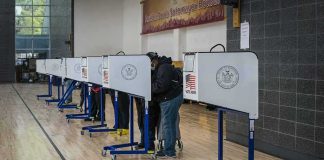
Election administration shaped the narrative arc but not the destination. Westchester County experienced machine issues that required ballots to be secured and scanned later under a court order—standard legal choreography for chain-of-custody and canvassing when tabulation equipment fails. Reporting documented those delays and the consequent sequencing of results, including the procedural step of physically transporting unscanned ballots before counting resumed. NBC’s decision desk tables reflected the dynamic count—at one point listing about 61 percent of expected votes tabulated and mapping what share Lawler would have needed to overcome the deficit—yet the evolving numbers converged on the same endpoint once the backlog cleared.
Two lessons endure. First, partial returns are a snapshot, not a verdict; the composition of what has reported, not just the overall share counted, governs apparent swings. Second, concession remains a consequential signal: campaigns have granular precinct-level insight into outstanding ballots. Lawler’s early acknowledgment that the Westchester tail of the count would not rescue him aligned with the post-lag totals that cemented Conley’s margin.
How NY-17 Became a Battleground and Stayed One
NY-17 has been structurally competitive through multiple cycles. Lawler’s 2022 victory over Maloney was decided by roughly two thousand votes, a razor-thin edge consistent with the district’s underlying partisan balance and the cycle’s broader environment. He expanded that margin in 2024, buoyed by incumbency advantages and a favorable map for Republicans, before the pendulum swung back in 2026 with Conley’s win—proof that incumbency is a force multiplier, not a force field. This oscillation is typical of swing seats bordering major metros: modest changes in suburban turnout, shifts among independents, and differential absentee participation can reverse outcomes without any dramatic local realignment.
For both parties, the district’s volatility imposes strategic discipline. Candidate fit matters; so does message salience on cost-of-living, commuter concerns, and local governance. But the base rate still rules: in districts like NY-17, mid-cycle national winds—from economic perceptions to presidential approval—often blow just hard enough to topple a two-cycle incumbent, especially when the trailing party recruits a credible challenger and invests early.
Competing Explanations and What the Evidence Supports
In closely watched defeats, postmortems tend to pin outcomes on a single voting bloc. The evidence here doesn’t justify it. While various narratives circulated about constituency patterns, including claims about an Orthodox Jewish bloc aiding Lawler, the available reporting that anchors this result provides no validated precinct analysis, exit polling, or voter-file study quantifying such an effect in 2026. The documented facts support a simpler and sturdier account: Conley earned more votes districtwide and held her lead through the completion of Westchester’s lagging count; major outlets reported consistent totals, and the incumbent conceded accordingly. Absent rigorous data, mono-causal accounts mistake anecdote for explanation.
This does not mean constituencies were irrelevant; it means proof of their decisive role requires the right tools. To attribute the result to any specific community with confidence, analysts would need precinct-level swing comparisons to 2022 and 2024, modeled turnout estimates, and, ideally, survey evidence. Until such evidence surfaces, the prudent inference is the one the vote totals already deliver: in a district accustomed to tight races, Conley assembled a coalition just large enough—and in the right places—to prevail.
Implications for Governing and the Next Cycle
Flips in seats like NY-17 reshape not just the House math but the incentives of both parties. For Democrats, Conley’s path demonstrates that credible challengers can defeat well-known incumbents if they contest the suburbs relentlessly and remain competitive in lower-salience precincts that often decide midterm margins. For Republicans, the loss is a reminder that incumbency must be defended with methodical attention to voter contact across early vote, mail, and Election Day—especially when administrative hiccups delay clarity and can depress enthusiasm late in the count.
Sources:
nypost.com, npr.org, nbcnews.com, nytimes.com, nbcnewyork.com, edition.cnn.com, lohud.com