When optical-scan tabulators stop accepting ballots across an entire county the moment polls open, the story is not mystery or intrigue; it is operations. Westchester County experienced a countywide scanner failure at 6:00 a.m. that forced an immediate shift to emergency-ballot procedures. Voting continued on paper, with ballots secured for later tabulation. That is the central fact pattern, and it is why this episode belongs in the category of serious but manageable election administration disruptions.
At a Glance
- Countywide scanner failures began at poll opening, disrupting normal machine tabulation.
- Voters completed paper ballots, which were secured in emergency bags for later counting.
- Officials publicly acknowledged the scope and worked with vendors; the cause was not immediately known.
- The event fits documented optical-scan failure modes; paper-based contingencies are designed to preserve votes.
What Happened: A Countywide Shift to Contingency Voting
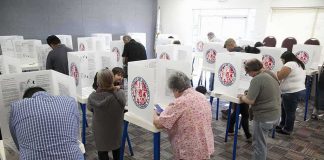
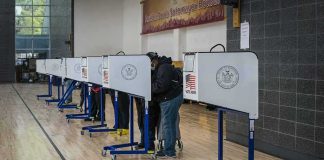
Westchester County’s optical-scan tabulators began rejecting ballots at the start of Election Day, triggering a jurisdiction-wide contingency plan. Poll sites instructed voters to complete standard paper ballots and deposit them into sealed emergency ballot containers for later tabulation under chain-of-custody procedures. Multiple contemporaneous reports characterized the failure as widespread, with officials and campaigns telling voters to remain in line and vote. The county confirmed that the issue prevented scanners from accepting ballots, and County Executive Ken Jenkins acknowledged the scope and uncertain timeline for a fix while the Board of Elections coordinated with vendors to diagnose the problem.
The onset mattered: scanners faltered as polls opened at 6:00 a.m., compressing detection, troubleshooting, and communications into the busiest arrival window of the day. That is why lines lengthened and why public briefings emphasized both the disruption and the fallback: every voter could still cast a ballot, and those ballots would be counted once scanners or central-tabulation processes were restored.
Mechanics: How Optical-Scan Failures Present and How Elections Ride Them Out
Optical-scan systems are robust in ordinary use but fail in recognizable ways. Mechanical feed problems (jams, double-feeds, skew) and optical issues (sensor degradation, misreads from poor print quality or unexpected paper characteristics) are well-documented. Environmental factors—humidity, dust, ballot stock thickness—can compound minor tolerances into countywide headaches when the same specification is replicated across all sites. None of these failure modes imply malfeasance; they are operational risks that election administrators mitigate with paper ballots, emergency containers, and post-election audits to reconcile counts and catch discrepancies.
New York’s paper-ballot architecture is built for precisely this contingency. When a precinct scanner will not accept a ballot, inspectors secure the unscanned ballots, maintain logs, and route them for tabulation under bipartisan procedures. Post-election canvass and audit processes, governed by state law, cross-check ballots issued, ballots cast, and ballots counted; if necessary, ballots can be rescanned on tested equipment or adjudicated under transparent, bipartisan rules. This redundancy—paper first, machine second—is why outcomes can be recovered faithfully even when front-end tabulation stalls.
The Public Record: What Officials and Reporters Established
Several facts are well-supported. First, the scope: reporting described a countywide or near-countywide inability of scanners to accept ballots. Second, timing: the issue manifested at poll opening, not as a later, localized glitch. Third, process: poll workers deployed orange emergency ballot bags or equivalent secure containers for all affected sites. And fourth, communications: Jenkins and other officials acknowledged the breadth of the problem and said technicians were working with vendors; the cause—ballot stock versus machine tolerance or maintenance—was not yet resolved during voting hours.
Campaigns responded in kind. Rep. Mike Lawler and his challenger each told voters to stay in line and submit ballots through the contingency channel. That consistent message—vote, and your ballot will be counted—reinforced the operational reality of paper-based elections: machine acceptance is the preferred route, not the only one.
Cause and Attribution: What Was Known and What Was Prudently Deferred
Early statements floated two plausible culprits: ballot characteristics (paper thickness, print) or scanner-side tolerances. The Board of Elections cited an “issue involving paper ballots,” while others emphasized that the root cause—ballot or machine—remained undetermined during the day. That is the appropriate boundary for same-day reporting: describe the failure mode and the mitigation, avoid speculating beyond the evidence. The investigative work that follows such an event typically includes collecting error codes and logs, checking scanner maintenance and calibration records, validating ballot-stock specifications against vendor tolerances, and testing representative ballots on known-good equipment.
Optical-scan literature and past incident reports provide a sober frame for this diagnostic path. Documented cases show scanners misreading fold lines as votes, rejecting ballots due to print or paper variance, or failing after inadequate cleaning. Controlled post-election rescans and audits are the standard remedy—unexciting, procedural, and effective when performed rigorously.
What Matters for Voters: Preservation, Reconciliation, and Audits
The critical voter-facing question is not whether a precinct scanner beeped “accepted” at 9:30 a.m., but whether the ballot you marked makes it into the certified canvass. Paper-first systems are designed so the answer is yes, even when scanners stall. Emergency ballot containment, custody logs, bipartisan transport, and central rescanning create a traceable path from issuance to tabulation. New York’s audit regime adds a further backstop: post-election audits test whether machine counts align with a hand-to-eye read of randomly selected ballots, and canvass procedures reconcile precinct-level tallies with county totals before certification.
The Westchester incident, serious as an Election Day disruption, unfolded within that safety architecture. Voters had a lawful way to cast a ballot, administrators had a lawful way to count it, and the canvass and audit provide the mechanism to confirm the totals. That is how a visible failure at the front end does not have to become a failure at the finish line.
@FoxNews NY State Board of Elections says the Westchester scanner failure traced to a programming change affecting one municipality's contest; it found no problem with the ballot paper. Every valid vote will be counted.
— Erik Bryant (@Trumpwon) November 3, 2026
Lessons for Administrators: Procurement, Testing, and Vendor Oversight
Large-scope failures typically prompt three lines of administrative review. First, procurement and acceptance: were ballot-stock specifications and vendor tolerances harmonized, and did pre-election logic-and-accuracy testing expose edge cases at scale? Second, maintenance and calibration: were scanners cleaned and verified under realistic conditions—actual ballot stock, humidity, and throughput—rather than bench tests? Third, vendor responsiveness and transparency: did service logs, error codes, and escalation timelines support a fast, credible diagnosis and fix? Each domain has documentary footprints administrators can review to strengthen the next cycle’s resilience.
Takeaway: Serious Disruption, Designed-for Recovery
Westchester’s countywide scanner failure was an operational debacle in the colloquial sense—lines grew, confidence was tested, and results were delayed—but it remained inside the envelope for which modern paper-based election systems are engineered. The important facts endure: the disruption was real and widespread; emergency procedures kept voting going; officials acknowledged the scope while technicians worked the problem; and the state’s canvass and audit processes provide the forum to confirm that ballots secured in those orange bags became votes in the certified totals.
Sources:
thehill.com, rawstory.com, cbsnews.com, fox5ny.com, lohud.com, myrye.com, elections.delaware.gov, tnsr.org