What matters in Washington’s latest turn on artificial intelligence is not a new statute or an agency rulebook, but a public compact: the largest U.S. AI developers and adjacent tech firms agreed with President Trump to police themselves, promising internal controls, independent audits, and board-level oversight—an arrangement that stakes U.S. competitiveness and public trust on industry governance rather than formal regulation.
The Short Version
- President Trump convened major AI and tech leaders at the White House and announced a voluntary accord to “self-police” advanced AI systems, framed around concrete internal governance measures.
- The accord’s core mechanisms include robust internal controls, independent external auditing, and board committees to review and act on audit findings, according to multiple outlets that reviewed the document.
- CEOs from market-leading firms publicly aligned on the premise that safety and innovation can advance together, while the administration tied the effort to economic growth, data-center investment, and national security.
- The commitments are voluntary; reporting describes no statutory enforcement or penalties, placing the burden of proof on company follow-through.
What the White House accord actually set in motion
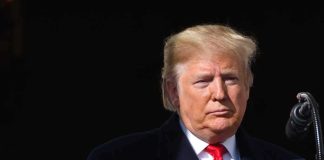
In a set-piece meeting with the most powerful actors in artificial intelligence and adjacent infrastructure, President Trump rolled out what was alternately described by attendees and press as an accord, pledge, or statement of principles. Labels aside, the operational spine is consistent across the strongest accounts: signatory firms commit to robust internal controls on system development, submission to an independent external auditor, and the creation of board-level committees that receive auditors’ reports and are charged with oversight and remediation. These are not abstract aspirations; they describe a governance architecture that specifies who monitors what, how evidence is gathered, and who is accountable for action.
The White House framed the pact as a self-regulatory framework, not a government-imposed rule. Speaker Mike Johnson characterized it as a voluntary statement of principles, and the administration’s staging underscored that the centerpiece was industry commitment rather than federal edict. The event gathered the sector’s dominant figures—reporting consistently placed Sundar Pichai, Mark Zuckerberg, Jensen Huang, Elon Musk, OpenAI co-founder Greg Brockman, and Anthropic’s Dario Amodei alongside the President—signaling that what was agreed would reverberate across the most consequential model labs and platform companies.
Mechanism: how internal controls, external audits, and boards fit together
Internal controls are the daily discipline—access management to model weights and training data, change controls on model updates, gated deployment pipelines, and red-team protocols. By themselves, they rely on managerial will. The accord’s second layer, an independent external auditor, introduces structured verification: a third party engaged to assess whether those controls work in practice, to test models for hazardous capabilities, and to review incident handling. The third component—board-level oversight—matters because it elevates findings above day-to-day incentives; when audit reports land with a board committee, the company’s fiduciaries must weigh risk and allocate resources for mitigation. That sequence—operational control, independent assurance, fiduciary accountability—is the canonical triad of corporate governance in high-risk systems, now transposed to frontier AI.
Industry leaders endorsed compatibility between innovation and safety. NVIDIA’s Jensen Huang, whose GPUs supply the compute backbone of modern AI, argued there is no inherent conflict between technological advance and rigorous safeguards. Meta’s Mark Zuckerberg emphasized the visibility those controls and audits create for boards, investors, and the public—visibility that, in theory, helps sustain trust during rapid iteration cycles typical of model development.
Why now: competitiveness, security, and the growth narrative
The accord also situates AI governance within a larger economic and geopolitical story. The administration explicitly tied governance to U.S. leadership in “super intelligence,” arguing that who leads in advanced AI will shape national power—an argument familiar from earlier general-purpose technologies such as semiconductors and the internet. The policy choreography paired governance language with a domestic buildout narrative: data centers, power procurement, and local partnerships portrayed as engines of jobs and community benefit, including high-profile examples of corporate-community arrangements around data-center campuses.
On the security axis, the message was continuity: advance fast, keep capabilities domestic, and avoid ceding ground to strategic competitors. That framing aligns with the presence of firms whose footprints span model development, cloud infrastructure, and chips; it also explains the emphasis on keeping data-center capacity in the United States to anchor both economic spillovers and control over sensitive compute.
Voluntary by design: what that does and does not mean
Voluntary frameworks are policy tools with a distinctive trade space. They move quickly, pull the biggest actors into alignment on baseline practices, and can evolve without legislative lag. They also lack coercive teeth: no civil penalties, no license revocations, no statutory duties. Reporting on the White House accord is explicit on this point; the commitments are voluntary, and no article that reviewed the document identified enforcement powers or sanction mechanisms for noncompliance. One sentence of caveat belongs here and only here: outlets did not report named auditors, audit schedules, or finalized board charters at the time of announcement, which means the critical details will emerge in the months after signature if companies implement as described.
In governance history, industry compacts often function as a first layer—establishing common vocabulary, expectations, and data that later inform formal rulemaking. The research literature on AI governance captures the pattern: voluntary commitments can signal responsibility and coordinate practices across firms, even as scholars warn they are not sufficient substitutes for public law and can trend toward “ethics washing” if not anchored by measurement and transparency. The administration’s approach plants a stake on the collaborative end of that spectrum.
Who is at the table—and why that concentration matters
The accord’s practical significance follows from who signed on. This was not a peripheral coalition; it brought together leaders from the firms that write the base models, operate the dominant cloud platforms, build the chips that set the field’s frontier, and run the consumer-scale surfaces where models meet billions of users. In networked technologies, alignment among hub actors can reconfigure norms quickly: common red-team practices, incident taxonomies, and release gates adopted at the top propagate through supply chains and partner ecosystems. Stated differently, if these companies actually instantiate auditor relationships and board oversight as promised, they can set de facto standards for the sector without waiting on formal standard-setting bodies.
That concentration is also why the White House stagecraft matters. When a President convenes market leaders to articulate a unified governance posture, it compresses a fragmented discussion into a single frame—“self-regulation with structured assurance”—and makes that frame legible to investors, state and local governments fielding data-center proposals, and international partners deciding how to treat U.S.-made systems.
TRUMP ANNOUNCES “WHITE HOUSE ACCORD ON SUPER INTELLIGENCE” SIGNED BY TOP AI LEADERS
President Trump announced a new “White House Accord on Super Intelligence,” signed by Elon Musk, Jensen Huang, Sundar Pichai, Dario Amodei, Mark Zuckerberg and Greg Brockman. The accord calls for… pic.twitter.com/MKT3GNq6T6
— Sergeant News Network (@sgtnewsnetwork) September 29, 2026
What to watch next: implementation signals that separate rhetoric from architecture
Because the announced model relies on corporate governance, the proof will appear in corporate artifacts. Three are dispositive. First, audited deliverables: named independent auditors, public descriptions of scope (capability evaluations, secure development lifecycle, incident response), and summaries of findings suitable for stakeholders who are not privy to proprietary model details. Second, board mechanics: committee charters that explicitly reference AI risk, scheduled review cadences, and documented remediation authorities. Third, product release notes and safety reports that show pre-deployment testing gates and post-deployment incident tracking consistent with the accord’s language. Several outlets described the accord’s requirements in precisely these terms; seeing firms translate them into repeatable, auditable processes is the next milestone.
Policy spillovers bear watching as well. Voluntary commitments can inform procurement criteria by federal and state agencies, shape liability expectations in courts evaluating negligence, and guide insurers’ underwriting models for AI-intensive operations. Internationally, a visible U.S. self-governance regime could interact with more prescriptive approaches abroad, testing the claim—voiced by executives at the White House—that safety and speed can, in practice, reinforce each other rather than trade off.
Bottom line
The White House accord is a deliberate bet: align the most capable AI developers around concrete corporate-governance levers—controls, audits, boards—and harness their incentives to scale safety alongside capability. The bet is coherent and, if implemented with rigor, could set a high floor for practice across the sector. It is also, by design, voluntary. The coming year will show whether the companies that built this era’s defining technology can make their own oversight as real as their code.
Sources:
youtube.com, detroitnews.com, cnbc.com, washingtontimes.com, reuters.com, abc11.com, 2news.com, apnews.com, deadline.com, bostonglobe.com, yahoo.com, kcra.com, link.springer.com, seattleu.edu, arxiv.org