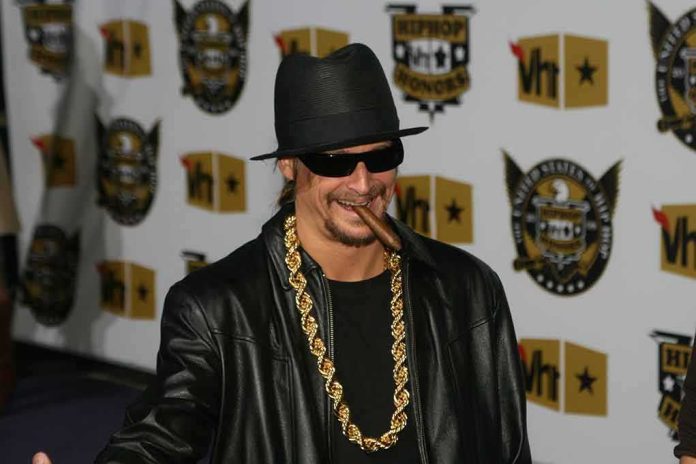
The fight over a low-flying helicopter pass near Kid Rock’s property became a stress test of civil–military boundaries: who gets to set discipline and oversight inside the Army, and how far civilian leaders can reach into an active administrative investigation without warping it.
The Short Version
- The Army opened a formal AR 15-6 investigation into an Apache flyby near Kid Rock’s Tennessee home and initially grounded the crew pending review.
- Days later, senior Pentagon leadership reversed the suspension, signaling direct intervention in how the Army managed the case.
- Defense Secretary Pete Hegseth then removed Army Chief of Staff Gen. Randy George, while the Pentagon publicly framed it as immediate retirement.
- Reporting links the dismissal to tensions over the helicopter probe; other reporting says the exit was unrelated, underscoring the ambiguity that often surrounds high-level removals.
What happened and why it matters
After a March 28 flight of two AH-64 Apache helicopters near Kid Rock’s Tennessee property drew public attention, the Army did what professional forces do: it triggered an administrative fact-finding under Army Regulation 15-6 (AR 15-6) and temporarily removed the crew from flight status while investigators examined safety protocols, approval lines, and any Federal Aviation Administration implications. That immediate containment—open the record, preserve testimony, hold flights—reflects standard aviation mishap discipline. The Pentagon’s subsequent move to end the suspension, and then the abrupt removal of the Army’s top officer, elevated a parochial aviation issue into a constitutional one: the line between appropriate civilian control and undue interference in ongoing oversight. The formal probe and initial suspensions are not in dispute; the motive for later personnel moves is. The distinction is the whole story.
On the record, a Pentagon spokesperson said Gen. Randy George would “be retiring … effective immediately,” a formulation Washington uses when it wants the fact of departure acknowledged without litigating causes. Separate reporting tied the reversal of the flight suspensions and George’s ouster to Secretary Hegseth’s effort to align the Army with President Trump’s priorities; another source told CBS the firing was not related to the helicopter incident—clean, categorical, and anonymous. That mix—documented process steps, visible interventions, and dueling unnamed attributions—is exactly the environment in which civil–military norms are made or damaged in public view.
How AR 15-6 investigations actually work
AR 15-6 is the Army’s catch-all procedure for administrative investigations. It is not a court-martial; it is a structured, legally reviewed process to establish what happened, who had authority, what rules governed the conduct, and whether corrective action is warranted. Crucially, the appointing authority—usually a commander or higher headquarters—retains wide discretion. Findings are reviewed for legal sufficiency, but the approval authority is not bound by the investigating officer’s recommendations and can narrow scope, reject conclusions, or take different actions altogether after legal review. That elasticity is by design; it lets leaders tailor remedies to risk and mission. It also means intervention from above can be lawful yet still corrosive if it appears to pre-judge outcomes or chill independent fact-finding.
In aviation incidents, the first, unglamorous step often includes immediate relief from flight duties while investigators collect statements, flight data, and airspace control inputs. That pause is not a presumption of guilt; it is a risk-control measure. The Army’s confirmation that the Kid Rock flyby triggered a formal AR 15-6 and temporary grounding aligns with that logic. Reversing the grounding before the inquiry matured into findings is unusual, not because it is forbidden, but because it risks signaling to witnesses and investigators that speed and optics outrank rigor. Process resilience depends as much on the appearance of independence as on the letter of the regulation.
Competing narratives about the firing
We have two clear, testable strands. First, the sequence of administrative facts: the Army opened a formal 15-6, suspended the aircrew, and the Pentagon reversed the suspensions; shortly thereafter, Secretary Hegseth removed Gen. George. Those steps are documented by the Army’s own public communication and by mainstream outlets with defense sources. Second, attribution of motive: The Washington Post reported that, days before George’s firing, another general—now a contender to replace him—advised George to stop the helicopter probe; other outlets cast the ouster as part of a broader push to install leadership more aligned with the civilian leadership’s agenda. Against that, CBS cited a source saying the firing was not related to the helicopter incident, while the Pentagon’s public line emphasized immediate retirement with thanks for service. These are not symmetrical claims. The first set ties back to specific actions; the second is a categorical denial without detail. In the hierarchy of evidence, concrete process beats motive attribution every time.
That does not license speculation. Civilian leaders possess broad removal authority, especially at the service-chief level, and they are entitled to pursue strategic alignment across the force. The issue here is narrower: when that prerogative intersects an open administrative investigation, norms demand extra care—transparent guardrails, clean separations between personnel decisions and case handling, and deference to the integrity of the fact-finding record. When the public record shows an investigation started, was visibly altered from above, and then the top uniformed officer departed abruptly, the burden shifts to leadership to articulate why those steps were proper and how investigative integrity was preserved. To date, the official explanation has not supplied that connective tissue.
The civil–military line: control versus interference
American civil–military practice draws a sharp line between civilian control—setting ends, approving budgets and promotions, appointing and removing senior leaders—and unlawful command influence in justice and quasi-justice processes. AR 15-6 sits in the gray zone: not criminal law, not courts-martial, but still the evidentiary backbone for administrative action, including flight status, reprimands, and career-impacting findings. That is why regulations require legal sufficiency reviews and empower appointing authorities while reminding them they are not bound by recommendations. The legal baseline permits intervention; the professional norm cautions against anything that could be read as outcome-shaping while the record is being built.
Done well, senior overrides are documented, narrowly tailored to safety or mission need, and insulated from the investigative core. Done poorly, they look like exceptions for the well-connected or the politically salient, inviting cynicism down the ranks. Aviation culture, in particular, runs on technical credibility; pilots accept scrutiny because they trust the process is evenhanded. If they conclude that a viral video can pull a crew off the line one day and a tweet can put them back the next, confidence erodes.
Pete Hegseth fired the Army’s top general in April with zero explanation, stonewalling both parties in Congress who asked directly why.
Now we know: Gen. Randy George wanted to investigate when military helicopters flew by Kid Rock’s house. Hegseth’s own #2 told George to drop… pic.twitter.com/HjzJFMg6ff
— Dittie (@DittiePE) August 26, 2026
What to watch going forward
Three markers will determine whether this episode becomes a one-week flap or a case study in erosion of norms. First, whether the AR 15-6 produces a timely, legally sufficient report and whether its core findings—airspace rules, approvals, safety margins—are adopted or discarded with documented reasoning. Second, whether Congress demands closed-session briefings that reconcile the timeline of reversals and removals with the integrity of the investigative record; congressional oversight is where vague “retirements” often meet sworn timelines. Third, the selection and confirmation dynamics for the next Army chief; if the successor is drawn from the circle involved in urging the probe’s halt, expect sharper scrutiny of independence claims. Process clarity, not personalities, is the remedy here.
Bottom line
The facts that matter are not in dispute: a formal Army investigation began; an interim safety measure sidelined a crew; senior leaders reversed that measure; the Army’s top officer departed immediately thereafter. The reasons for the final personnel move remain contested in anonymous sourcing and official euphemism. In such cases, trust hinges less on who wins the framing war and more on whether the underlying administrative process is allowed to finish cleanly—and be seen to have done so. Civilian control is nonnegotiable; so is the integrity of military oversight. Leaders who fail to protect both at once win the news cycle and lose the institution.
Sources:
aljazeera.com, washingtonpost.com, reuters.com, breakingdefense.com, thehill.com, strickland.house.gov, ndtv.com