
Donald Trump turned a routine primetime speech into a direct threat against two major television networks, demanding the government rip away their licenses because they refused to air him live.
Story Snapshot
- Trump’s election-focused speech ended with a call to revoke ABC and NBC broadcast licenses over a programming decision.
- He accused the networks of joining a “plot” to hide supposed election fraud and said “fraud like this” should cost them their licenses.
- Legal and First Amendment experts say the government cannot yank licenses over editorial choices or force live coverage of political speeches.
- The clash highlights a long-running pattern: Trump uses license threats to punish “fake news,” while regulators insist the First Amendment still draws a hard line.
Trump’s speech, the snub, and the license threat
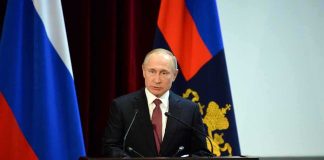
President Donald Trump delivered a primetime address from the White House focused on what he framed as “election security” and “election integrity.” ABC and NBC, two of the three biggest broadcast networks, chose not to carry the speech live on their main channels, keeping regular programming in place instead. During and after the speech, Trump turned that decision into the story, blasting the networks for refusing to air him and calling the move part of a larger scheme against him.
Toward the end of his roughly 26-minute remarks, Trump said ABC and NBC skipped the address “because they don’t like the topic,” meaning his claims about fraud and broken elections. He told viewers the networks “and others in the media are part of a plot” to hide what he called widespread wrongdoing. He then argued that “fraud like this should mean a revocation of their licenses” and complained that broadcasters “use our public multi-billion-dollar-in-value airwaves for absolutely no money” while treating him unfairly.
Networks made an editorial call, not a technical one
ABC and NBC did not block Trump from speaking; they made a classic editorial decision about live carriage of a political address outside the formal State of the Union or an official national emergency. They signaled in advance they would not air the speech in full and would instead cover it as news, with clips and reporting, on other platforms and later newscasts. This choice matched how major outlets handled past Trump speeches heavy on election claims, including cutting away when he made false fraud allegations in 2020.
Major newsrooms argue that live coverage is not a presidential right but a judgment call based on news value, truthfulness, and context. Many journalists and editors say airing long, unfiltered speeches filled with unproven claims puts viewers at risk of being misled in real time, especially on a topic as sensitive as elections. Critics of the networks see this as bias, but news leaders frame it as basic gatekeeping: they will carry official addresses, yet reserve the right to treat campaign-style speeches differently.
Trump’s pattern of using licenses as a political weapon
Trump’s demand on July 16 was not a one-off burst of anger. Going back to his first term, he has floated yanking broadcast licenses for networks he calls “fake news,” “dishonest,” or “an arm of the Democratic Party.” He has suggested challenging licenses for NBC and other stations after unfavorable reporting, posting that “network news has become so partisan, distorted and fake that licenses must be challenged and, if appropriate, revoked.” He has repeatedly said a network’s negative coverage should have real regulatory consequences.
Trump has also praised allied regulators who push license reviews. Federal Communications Commission Chair Brendan Carr, a Trump-aligned official, ordered early examinations of ABC station licenses, tying them to diversity and inclusion probes. Trump backed Carr’s broader threats to broadcasters whose war coverage or election reporting angered the administration. From a conservative, common-sense perspective, using government power to punish speech you dislike is hard to square with the First Amendment and the long-held belief that the state should not decide what is “correct” news.
What the law actually allows the FCC to do
Broadcast licenses come from the Federal Communications Commission, not the White House. The commission can revoke a station’s license under a rarely used “public interest” standard, usually for serious misconduct such as fraud, technical violations, or criminal acts. Experts note that the FCC has not pulled a major broadcaster’s license over content decisions in more than forty years. Legal scholars across the spectrum say taking a license because a station refused to air a political speech would be flatly unconstitutional.
First Amendment lawyers stress a simple point: the government is not allowed to decide what is newsworthy or force private outlets to carry political messages. As one foundation counsel put it, “The First Amendment doesn’t permit the president to demand coverage by royal decree.” The current FCC leadership has echoed that view, saying the commission “does not and will not revoke licenses… simply because a political candidate disagrees with or dislikes content or coverage.” Commissioners like Anna Gomez have called Trump’s revocation talk “ridiculous” and “without substance.”
Why this fight matters for viewers and voters
The clash over ABC and NBC’s decision sits at the crossroads of two values many conservatives care about: distrust of big media and strong support for free speech. Trump speaks to real frustration with biased coverage when he attacks networks as Democratic Party mouthpieces and points to overwhelmingly negative stories about him. But his answer is not more speech or better arguments; it is government punishment for networks that will not give him live, unfiltered airtime.
That approach shifts the fight from cultural to constitutional. Americans who want fair media also usually want limited government. If a president can threaten licenses over programming choices, then any future president—left or right—could try to silence stations that tell hard truths about them. Experts are almost unanimous that Trump’s proposed cure is worse than the disease. In the end, the real check on ABC and NBC is the viewer’s remote control and the advertiser’s budget, not the president’s anger or the regulator’s hammer.
Sources:
mediaite.com, reuters.com, theguardian.com, npr.org, cnbc.com, politicalwire.com, nbcnews.com, youtube.com, brookings.edu, internazionale.it, thedailybeast.com, theatlantic.com, abc.net.au, bostonglobe.com, pbs.org, cnn.com, article19.org, usatoday.com