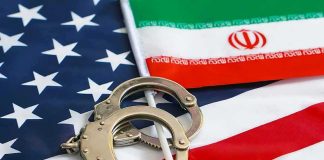
The most unsettling part of the Tenet Media story is not that foreign propagandists allegedly paid American influencers, but how normal the whole operation looked from the outside.
Story Snapshot
- Russian state-linked operators allegedly used a Tennessee media firm, Tenet Media, as a cutout to pay U.S. creators while hiding the Kremlin’s hand [2]
- The Justice Department says these campaigns relied on influencers, fake profiles, artificial intelligence content, and paid ads to sway U.S. voters and foreign audiences [2]
- Experts now describe “disinformation as a service” — a global industry that rents out propaganda tools like a marketing agency [3]
- The biggest open questions: what the influencers actually knew, how far the money trail runs, and whether Washington will finally regulate these influence shops [1][2][3]
The Tenet Media model and what the Justice Department actually alleged
The U.S. Department of Justice alleges that Russian state media outlet RT did not simply hire Americans directly; it allegedly routed roughly ten million dollars through a Tennessee-based firm called Tenet Media to pay far-right influencers to push content carrying hidden Russian government messaging [2]. According to that reporting, Tenet Media functioned as the onshore face of an offshore narrative, letting creators sign contracts with a U.S. company while the Kremlin allegedly sat several layers back in the shadows [2]. Justice Department language in related foreign influence cases repeatedly emphasizes the word “covert,” signaling that failure to disclose the true sponsor is not a side detail but the core of the offense [1][2]. For an audience that assumes “I’m just watching a podcast,” the allegation is blunt: you may in fact have been part of a state-backed information operation you never signed up for.
According to the Justice Department, this structure fits into a broader foreign malign influence toolkit that leans on influencers, artificial intelligence generated content, and paid social media ads to drive traffic to propaganda sites that masquerade as legitimate outlets [2]. In the “Doppelganger” case, Russian firms allegedly directed by President Vladimir Putin’s inner circle created cybersquatted domains mimicking real news brands, then used paid influencers and fake profiles to funnel users into those lookalike sites [2]. The department’s own affidavit describes how these operations “covertly spread Russian government propaganda” and deliberately hid the Russian source while targeting specific American demographics and regions in the lead-up to the 2024 election [2]. That pattern shows why Tenet-type intermediaries are so valuable: they provide the plausible American wrapper that keeps viewers from asking who is really paying for the message.
Outsourced propaganda as a business, not a one-off scandal
Policy researchers now talk about disinformation the way consultants talk about marketing: as a bought-and-sold service that foreign powers can outsource to specialized networks [3]. The Center for Strategic and International Studies describes foreign malign influence operations that route money and messaging through public relations shops, nonprofit hubs, and advocacy groups rather than obvious state organs [3]. A House hearing on foreign influence in American nonprofits detailed how a network linked to a wealthy American businessman in Shanghai allegedly channeled hundreds of millions of dollars into organizations that consistently echoed Chinese Communist Party narratives while looking “dramatically homegrown” [5][3]. From a conservative, common-sense standpoint, this looks less like spontaneous activism and more like a sophisticated franchise model: the propaganda factory licenses its narrative to local operators who speak with an American accent, file American paperwork, and insist they just happen to agree with Beijing or Moscow.
The Justice Department’s own policy on foreign influence disclosure acknowledges how difficult this ecosystem is to police. The department created guidelines to decide when to alert tech companies, unwitting recipients, and the public that a foreign government is covertly trying to shape American discourse [1]. Those guidelines stress that the department only labels an operation “foreign influence” when it can attribute it to a government with “high confidence,” and explicitly excludes unknown or domestic actors from that category [1]. The same policy warns against partisan use of such disclosures, insisting that no alert should be aimed at conferring political advantage [1]. In other words, Washington knows accusations of foreign manipulation are explosive and tries, at least on paper, to reserve them for cases where the evidence is strong.
The unresolved questions about creator knowledge and accountability
One point often lost in the shouting: the public record so far does not contain a final court finding that specific U.S. influencers knowingly took Kremlin money through Tenet Media [1][2]. What we have, based on the supplied material, are Justice Department allegations, affidavits, and secondary reporting that describe the architecture of the scheme but stop short of publishing every contract, invoice, and email [1][2]. From a rule-of-law perspective, that matters. Allegations can be well-founded, but conservatives especially should insist on seeing underlying bank records, ownership documents, and communications before declaring a private citizen effectively a foreign agent. Without those details, it remains difficult to say, creator by creator, who was complicit and who was simply incurious about where the checks came from.
The gap between what investigators know and what the public sees creates an uneasy vacuum. National security concerns justify redactions and sealed affidavits, but they also limit the ability of innocent actors to clear their names and of skeptical citizens to verify claims [1][2]. At the same time, foreign influence is not a phantom menace; multiple cases now document structured attempts by Russia, China, and others to penetrate American media, nonprofits, and even government agencies through layered fronts [2][3][4][5][6]. For voters over forty who grew up during the Cold War, this may feel familiar: the same game of influence operations and useful idiots, updated for the age of podcasts and TikTok. The hard balance ahead is to expose and deter genuine foreign manipulation without turning “foreign influence” into a catchall label to discredit any dissenting voice.
Sources:
[1] Web – Justice Department Disrupts Covert Russian Government …
[2] Web – From Cambridge Analytica to Tenet Media: What Will it Take for the …
[3] Web – Foreign Malign Influence Targeting U.S. and Allied Corporations
[4] Web – Foreign Influence Operations and National Security
[5] Web – Six Key Moments: Hearing on Foreign Influence in American Non …
[6] Web – Foreign Influence Operations’ Use of Social Media Platforms (Third …