Trump’s demand for a Fed chair who cuts interest rates “right away” is colliding with hard economic realities and a nervous political class that remembers what runaway inflation did to American families.
Story Snapshot
- Trump wants a new Federal Reserve chair who will start cutting interest rates immediately to relieve pressure on workers, homeowners, and small businesses.
- Economists and some Republicans warn that if inflation flares again, rapid cuts could backfire and punish savers, retirees, and the broader economy.
- Leading contender Kevin Hassett vows he would “do the right thing” and refuse cuts if inflation jumps, testing how far Fed independence will really go.
- Upcoming Senate confirmation fights will decide whether Trump’s growth agenda or Fed institutional caution sets the pace on interest rates.
Trump’s New Fed Chair Demand and What It Means for Your Wallet
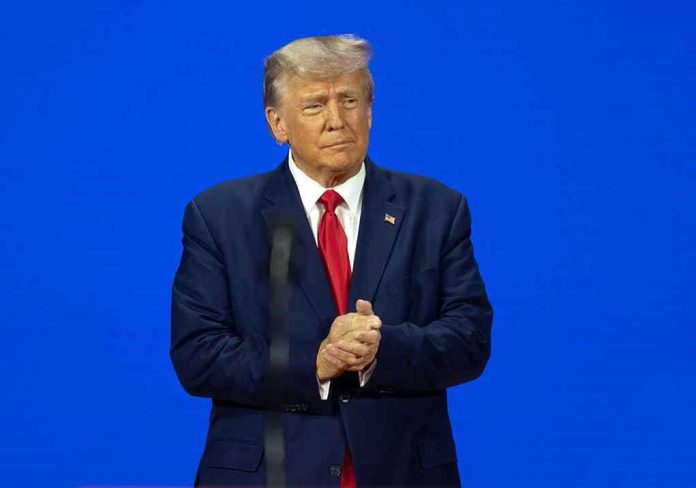
Trump is openly signaling that his next Federal Reserve chair should waste no time cutting interest rates, reflecting deep frustration among Americans who endured Biden-era inflation, soaring borrowing costs, and stagnant real wages. He is telling voters he wants relief now for mortgages, credit cards, car loans, and small-business credit lines that have been squeezed by years of elevated rates. For many conservative households, that sounds like overdue correction after Washington’s reckless spending and monetary mismanagement.
The Fed, however, is not supposed to be a political arm of the White House, even when the president is right about how much pain families are feeling. By law, the central bank’s job is to keep prices stable and support maximum employment, which sometimes means holding rates higher than politicians would like. Trump can choose a chair who shares his instincts, but that chair still faces hard numbers on inflation, growth, and the job market that cannot be wished away by campaign promises or party platforms.
Inflation Scars, Rate Cuts, and the Limits of Political Pressure
After the pandemic and trillions in stimulus, the Fed jacked rates up at the fastest pace in decades to confront the worst inflation spike since the early 1980s. Those hikes helped cool price growth but hammered rate-sensitive sectors like housing, construction, and manufacturing. By 2025, with the job market softening, the Fed has already begun cutting, moving toward a third straight reduction to support employment. Conservatives want relief but also remember that once inflation gets loose, it destroys savings and fixed incomes first.
That is why even some Republicans who agree with Trump’s instincts are warning that data must drive decisions, not political timelines. Senators on the Banking Committee are signaling they will ask any nominee point-blank whether they will resist pressure to cut if inflation resurges. Markets are watching as well: if investors conclude the Fed is becoming just another political tool, they will demand higher long-term interest rates to protect themselves, which would undercut exactly the growth, home-buying, and investment that Trump and his voters want to revive.
Kevin Hassett, Fed Independence, and a Test of Conservative Principles
Former White House economic adviser Kevin Hassett has emerged as a leading contender for the chair. He is viewed as philosophically close to Trump on growth, taxes, and deregulation, yet he publicly insists that as Fed chief he would “do the right thing” even when it is unpopular. At a recent CEO forum, he went further, arguing that if inflation moved from roughly 2.5 percent back toward 4 percent, the central bank simply “can’t cut” rates without betraying its mandate.
For constitutional conservatives, that stance hits a nerve. On one hand, they want a chair who respects limits, follows the law, and protects the dollar rather than chasing political favors. On the other, they finally have a president willing to call out the unelected banking establishment that kept money easy for Wall Street for years, then turned the screws on Main Street under Biden. Hassett’s comments suggest the next chair could be friendly to lower rates but unwilling to gamble again with the kind of inflation spike that gutted family budgets.
How the Coming Fed Fight Could Shape Trump’s Second-Term Economy
The next several months will reveal whether Trump’s call for immediate cuts becomes reality or runs into a wall of institutional caution. Senate confirmation hearings for his nominee will likely become a national debate over who really runs economic policy: voters who demanded a course correction in 2024, or technocrats who prefer slow, incremental moves even after years of policy failure. Conservatives who care about limited government will be watching whether senators defend Fed independence as a constitutional guardrail or as a shield for unaccountable elites.
For households still paying more at the grocery store, juggling higher interest payments, and wondering when Washington will finally put their needs ahead of global agendas, this Fed battle is not abstract. If Trump secures a chair who can responsibly lower rates while keeping inflation contained, middle America could finally see breathing room on loans and real wages. If the Fed drags its feet or panics markets with mixed signals, families may be left riding another cycle of boom, bust, and broken promises from the same experts who claimed inflation was “transitory.”
Sources:
Trump wants his Fed chair to cut rates. The economy may have other ideas.