A jihadi strongman now ruling Syria in militant fatigues is a brutal reminder of what happens when Washington chases globalist fantasies instead of hard‑nosed American security.
Story Snapshot
- Syria’s president, longtime jihadist leader Abu Mohammed al-Jolani, marked Assad’s fall by appearing in full militant uniform.
- His rise exposes how years of confused Western policy and Obama-Biden-era missteps opened space for jihadist factions.
- Trump’s renewed “America First” doctrine contrasts sharply with the globalist approach that helped create this chaos.
- Jolani’s message is clear: jihadist power is back—and it thrives when the West is weak, distracted, and divided.
Jihadi President Uses Symbolism to Project Power and Fear
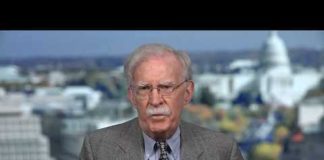
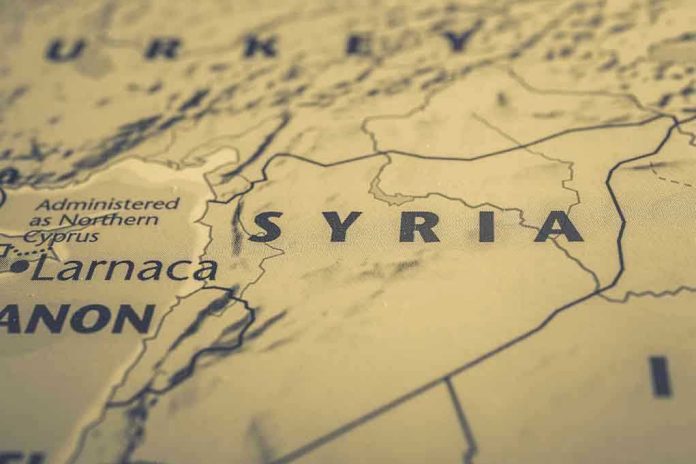
On December 8, 2024, Syria’s new president Ahmed al-Sharaa, better known internationally as Abu Mohammed al-Jolani, marked the anniversary of Bashar al-Assad’s flight from Damascus by donning full militant uniform, complete with combat gear and insurgent-style insignia. His televised appearance, surrounded by armed loyalists, was not a routine photo-op but a carefully staged warning to enemies at home and abroad. The message was simple: the jihadist movement now rules Syria, and it intends to stay.
For conservative observers, Jolani’s choice of dress carries the same weight as a dictator’s tank parade through a captured capital. He rose to power as leader of the terrorist organization Hayat Tahrir al-Sham, a group that evolved out of al-Qaeda-linked networks and fought both Assad and rival jihadists. By wearing a battlefield uniform as head of state, he is erasing any line between “government” and “militia.” That blurring should concern every American who remembers 9/11, ISIS, and the failed “Arab Spring.”
How Years of Western Confusion Helped Pave the Way
When Assad’s regime began to crumble, the Obama-Biden foreign policy establishment chased dreams of managed regime change and democratic uprisings, while the facts on the ground looked very different. Various factions, from secular rebels to hardline jihadists, competed for territory and weapons. Washington’s shifting red lines, half-hearted interventions, and muddled support to “moderate rebels” created a vacuum where the strongest and most ruthless actors thrived, not Western-friendly democrats.
In that environment, Jolani and his network proved more disciplined than many rivals. They built parallel courts, security services, and tax systems in parts of northern Syria while Western diplomats still spoke as if a quick political settlement were around the corner. As U.S. attention drifted to other crises and globalist talking points, jihadist commanders patiently consolidated power. Assad’s eventual flight did not usher in stability or freedom; it handed Syria to a man who had already been wanted internationally as a terrorist leader.
Why Jolani’s Syria Matters to American Security and Borders
Jolani’s Syria is not just a distant tragedy; it is a live case study in what happens when American leaders forget that national security starts with clear-eyed realism. A jihadist-controlled state provides training grounds, weapons pipelines, and ideological propaganda that can reach disaffected recruits worldwide. History shows that ungoverned or terror-run territory—from Afghanistan under the Taliban to ISIS’s caliphate—eventually exports violence, whether through organized plots or lone-wolf radicals inspired online.
Those risks grow when America’s own borders are weak. Under the prior Biden administration, millions of illegal crossings and a flooded asylum system made screening more difficult and overwhelmed law enforcement. That environment is tailor‑made for bad actors to slip through, hide among economic migrants, and exploit overwhelmed agencies. A Syria ruled by a veteran jihadist amplifies those dangers, making strong borders, rigorous vetting, and tight immigration controls a matter of basic homeland defense, not “xenophobia.”
Trump’s Return and the Rejection of Globalist Fantasy
Trump’s return to the White House in 2025 signaled a decisive break from the old bipartisan consensus that treated global institutions and “nation‑building” schemes as solutions to every crisis. His earlier administration had already shown that crushing ISIS on the battlefield, pressuring Iran, and demanding NATO pay its fair share could restore deterrence without endless new ground wars. The lesson was plain: when America projects strength and clarity, jihadist movements lose territory, money, and momentum.
By contrast, the era that led to Jolani’s ascendancy was defined by half-measures and ideological distractions—climate conferences, gender programs, and DEI boxes checked while terrorists regrouped. For conservatives, this outcome reinforces a long-held view: Washington elites cannot remake the Middle East into a Western-style democracy by funding NGOs and issuing stern press releases. Real security comes from securing American borders, crushing terror networks, and refusing to legitimize extremists simply because they seize government buildings.
Jolani’s militant uniform on the anniversary of Assad’s fall should therefore be read as both a regional and a global warning. It reminds Americans what is at stake when foreign policy drifts, when border enforcement weakens, and when leaders prioritize “woke” image campaigns over hard security. For a Trump-supporting, conservative audience, the image underscores why an America First approach—strong borders, energy independence, military strength, and zero tolerance for jihadist regimes—is not optional but essential to safeguarding our families and freedoms.
Sources:
From Syrian jihadist leader to rebel politician: How Abu Mohammed al-Jolani reinvented himself