Memorials are not just places; they are boundaries we draw around grief, legitimacy, and civic belonging—and fights over who stands inside those lines tell us as much about a city’s values as the ceremony itself.
The Short Version
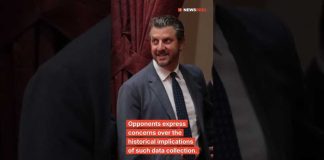
- A petition by some relatives of 9/11 victims sought to bar New York City Mayor Zohran Mamdani from the 25th-anniversary ceremony; major outlets reported tens of thousands of signatures, though who among them were family members was not independently verified.
- Opponents framed their case around Mamdani’s public associations and responses to contentious rhetoric; supporters emphasized the long-standing norm that elected officials attend as mourners, not speakers.
- Mamdani pledged to attend and anchored his participation in a broader city remembrance effort, including an executive order establishing September 11 as a Day of Remembrance and Service.
- The dispute exemplifies “memorial politics”: genuine family pain meets broader partisan incentives, with inclusion at the site functioning as a test of civic membership rather than a policy fight.
What the fight is really about: symbolic access to sacred space
Ground Zero’s annual commemoration is built around a simple ritual—reading names, ringing bells, and holding silence—precisely to minimize politics and maximize dignity. Yet the conflict over Mayor Zohran Mamdani’s attendance shows that even a nonpolitical format cannot escape the hard question: who counts as a legitimate mourner in a plural city. A petition, initiated by relatives of 9/11 victims, asked organizers to consider excluding Mamdani, arguing that his public associations and responses to charged slogans cut against the ceremony’s solemn purpose; coverage in major outlets documented the drive and its scale claims, while also noting the difficulty of confirming how many signers were in fact family members. The pushback does not allege an operational threat to the ceremony; it contests the mayor’s symbolic standing at its center.
Opposition coalesced around two pillars. First, perceived associations—appointments and past connections—were framed as aggravating signals, even though they are several steps removed from the event’s ritual conduct. Second, critics argued that public rhetoric around adjacent controversies created an atmosphere misaligned with the memorial’s ethos. These are classic markers of boundary-policing at sites of collective trauma: the claim that certain ties or tones render a presence discordant. Such arguments resonate emotionally, especially for those who shoulder the memory of the day most personally. They also lean heavily on inference and association, not direct evidence of misbehavior at the memorial itself.
The countervailing norm: attendance as duty, not platform
Against calls to exclude him, Mamdani committed to attend and cast his role in the tradition of New York’s mayors: to stand with families, survivors, and first responders without turning the podium into politics. He tied that stance to formal city actions—most notably an executive order establishing September 11 as a recurring Day of Remembrance and Service and encouraging agencies to mount ceremonies and educational programming in honor of victims and those who answered the call. That linkage matters. Ritual authority at memorials flows not from a personality but from maintaining the ceremony’s settled grammar: presence, not performance; mourning, not messaging. An advocacy coalition of 9/11 relatives, September 11th Families for Peaceful Tomorrows, echoed that norm by supporting the presence at Ground Zero of anyone who comes to pay respects.
Put plainly, the strongest specific facts on the exclusion side are the petition and named relatives voicing distress; the strongest specific facts on the inclusion side are the ceremony’s longstanding practice of welcoming elected officials as silent participants and the city’s formal remembrance actions reinforcing that posture. The evidentiary gap is where many controversies over memorial access stall: moral intuitions are intense, but documentary proof of conduct mismatched to the ceremony is thin.
How memorial disputes get here: the mechanics of “who belongs”
Fights like this share a recognizable structure. Families seek recognition and protection of the memorial’s emotional perimeter. Political actors—sometimes sincerely, sometimes strategically—align with that claim to signal solidarity, or to mark an opponent as beyond the pale. Media framing then amplifies the most combustible elements: signature counts, sharp quotes, and associative allegations. What drops out is the institutional backbone of the ceremony: rules that keep political speeches out, a choreography centered on names and silence, and a practice of admitting public officials as mourners rather than protagonists. In prior years, even disputes over whether politicians could speak were resolved by reverting to the nonpolitical format, not by policing who may stand on the plaza.
Courts and organizers have likewise treated family claims as morally weighty but not controlling of public space, particularly where remains, site design, or access are at issue. That tradition locates authority in the ceremony’s design and custodial institutions, not in any one constituency’s veto. When inclusion norms hold, they channel disagreement back into process and tone—show up, stand back, say less—rather than into exclusion. Empirically, inclusive memory policies do not reliably provoke the backlash their opponents predict, especially when the choreography safeguards dignity.
Assessing the evidence honestly: what we know, what we don’t
Two claims can both be true: some families experienced genuine pain at the prospect of Mamdani’s presence, and the public case for barring him rested on associations rather than on direct, documented conduct that would disrupt the memorial. Coverage showed substantial petition traction—variously described as tens of thousands of signatures—while highlighting the verification problem that dogs online mobilizations, namely, distinguishing relatives of the fallen from broader public signers. On the other side, the city’s executive actions around remembrance are concrete administrative steps; they exist on paper and instruct agencies to honor victims and first responders, aligning the mayor’s attendance with a clear public rationale rather than mere insistence.
Where skeptics should aim their scrutiny is narrow and practical. If the concern is tone at the site, the guardrails are known: no speeches outside the program, adherence to the memorial’s protocol, and deference to the name-reading at the heart of the ritual. If the concern is association, the relevant remedy is sunlight—publish the hiring files, the conflict checks, and the record of prior representations so the claims can be weighed on documents rather than headlines. Neither line of scrutiny requires exclusion to preserve dignity; both require discipline to separate grief from opportunism.
9/11 families are pleading with NYC Mayor Zohran Mamdani to stay away from the 25th anniversary memorial ceremony at the World Trade Center.
Over 100,000 others have joined them, signing a petition calling for Mamdani to keep his distance on the solemn anniversary.
Organizers…
— This S**t is Not a Newspaper (@thisisnotanews) September 8, 2026
Why it matters going forward: keeping the ritual stronger than the argument
Ground Zero’s ceremony has endured because its form is sturdier than any given year’s argument. Maintaining that resilience does not mean flattening pain or denying controversy; it means protecting the grammar that lets a plural city grieve together. The petition campaign demonstrated that some families felt the boundary had been breached, at least symbolically. The institutional response—reasserting attendance as duty, embedding remembrance in executive action, and upholding a nonpolitical format—demonstrated another boundary: the ceremony is not a referendum on identity or associations; it is a civic silence where all who come to mourn must conform themselves to the ritual, not the other way around. That is how shared memory—tense, imperfect, but common—survives the politics that will always swirl around it.
Sources:
youtube.com, change.org, foxnews.com, cbsnews.com, cnn.com, nypost.com