
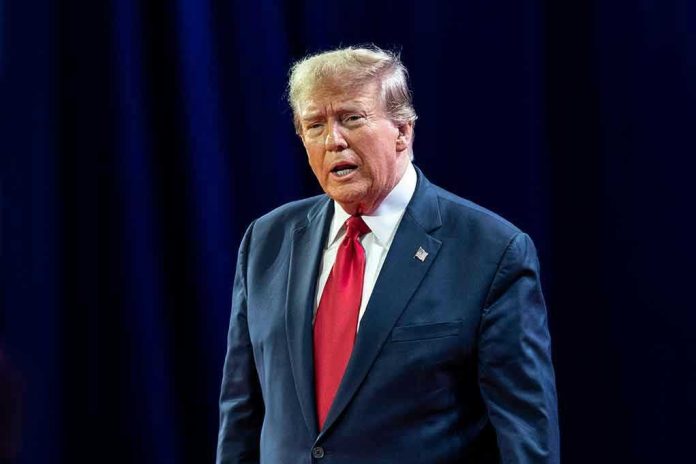
Trump has just ordered the United States out of 66 global bodies at once, slamming the brakes on decades of costly “global governance” and putting American sovereignty back in the driver’s seat.
Story Highlights
- Trump’s January 7, 2026 directive launches U.S. withdrawal from 66 international organizations, conventions, and treaties after a year‑long State Department review.
- The move targets climate and UN‑linked bureaucracies critics say pushed globalist, anti‑growth agendas on American workers and taxpayers.
- The White House frames the decision as restoring sovereignty, cutting waste, and ending U.S. subsidy of hostile or ineffective institutions.
- Foreign officials and blue‑state leaders condemn the shift, warning of lost “leadership” as power shifts toward China and the EU.
Trump Turns State Department Review into a Sweeping Sovereignty Reset
On January 7, 2026, President Trump signed a directive ordering executive agencies to begin withdrawing the United States from sixty‑six international organizations, conventions, and treaties that a formal State Department review concluded no longer serve American interests. The order caps a process launched by Executive Order 14199 in February 2025, which required a government‑wide audit of every international body Washington funds or joins. For frustrated taxpayers, this is the promised America First review finally translated into concrete action.
The presidential memorandum instructs departments to take “immediate steps” to wind down participation and funding “as soon as possible,” subject to legal limits and treaty exit procedures. That language matters for conservatives who watched prior administrations drag their feet and hide behind process to preserve the status quo. Here, the default setting is exit unless staying clearly advances core U.S. economic, security, or constitutional interests. Bureaucrats must justify membership, not withdrawal, reversing decades of inertia.
Globalist Climate Infrastructure and UN Bureaucracies Face Major Cutbacks
The most controversial targets are climate‑related institutions that have long driven green mandates and pressure campaigns against American energy and industry. The list includes the UN Framework Convention on Climate Change, which underpins the Paris Agreement architecture, and the Intergovernmental Panel on Climate Change, the UN‑backed body whose reports fuel regulatory pushes and net‑zero demands. By stepping away institutionally, the administration aims to stop paying for forums that treat American prosperity as a problem to be managed rather than a success to be replicated.
Beyond climate, the withdrawal list reaches deep into the UN system and a web of newer multilateral clubs dealing with development, digital policy, peacebuilding, and social issues. Entities such as the UN Democracy Fund, UN Women, and various peacebuilding and population agencies have often advanced progressive social agendas—from expansive abortion regimes to speech‑policing “tolerance” campaigns—that clash with traditional family values and free‑speech protections. For many conservatives, backing out is less about isolationism and more about refusing to underwrite institutions that routinely lobby against U.S. positions and pressure allies to mirror left‑wing cultural policies.
Critics Warn of Lost “Leadership,” Supporters See an End to Paying the Bills
Global climate officials, international NGOs, and Democratic state leaders quickly denounced the decision as an abdication of U.S. leadership that will hurt long‑term security and economic interests. UN climate representatives called the move a “colossal own goal,” insisting that Washington is undermining its own prosperity by stepping back from coordinated climate efforts. Blue‑state governors echoed these claims, arguing that America is handing influence to China and the European Union in key forums that set rules for energy, trade, and technology standards worldwide.
The administration counters that “leadership” built on writing the biggest checks while accepting lopsided deals is exactly what voters rejected. Officials argue that many of the sixty‑six targeted organizations are inefficient, unaccountable, or openly biased against U.S. and Israeli interests, yet still expect reliable U.S. funding. Rather than weaken America, they say, exiting will free resources for domestic priorities, strengthen border security and defense, and push allies to shoulder more responsibility instead of assuming Washington will always underwrite sprawling global bureaucracies.
Implementation Phase Tests the Deep State’s Commitment to America First
Agencies now face the complex legal and diplomatic work of translating the memorandum into reality: issuing formal withdrawal notices where treaties require them, cutting financial contributions, vacating leadership seats, and disentangling staff from technical committees and working groups. Some agreements involve statutory obligations that may require congressional action or longer timelines, meaning the bureaucracy cannot simply flip a switch. For constitutional conservatives, this phase will reveal whether career officials follow the directive or quietly try to stall, dilute, or reinterpret it.
Foreign critics claim the United States will lose “influence” without seats at every global table. Supporters answer that influence built on compromising sovereignty, tolerating anti‑American resolutions, and funding organizations hostile to gun rights, parental authority, and border enforcement is not worth preserving. They see this as one front in a broader rollback of the pre‑Trump consensus—one that tied American workers and families to elite global projects while ignoring everyday concerns about wages, crime, and cultural stability at home.
Sources:
Trump withdraws US from 66 international organizations, including pivotal climate treaties
Trump Orders U.S. Withdrawal from International Organizations and Treaties
Withdrawal from Wasteful, Ineffective, or Harmful International Organizations